Safety & compliance Guide
Pre-start checks on mine sites: what the law requires
Pre-start checks on SA mines: regulation 8.10.24 requires operators to inspect trackless mobile machines before use and complete a checklist each shift.
Contents 9 sections
In South Africa, regulation 8.10.24 of the Mine Health and Safety Regulations requires a procedure for inspecting trackless mobile machines immediately before use. The operator physically checks that the brakes, lights and other defined safety features work, and completes a checklist at the start of the shift that states, for each item, whether the machine may be put in motion.
A pre-start is only useful when each failed item reaches the workshop as a defect, is repaired on a job card and is closed out before the machine runs again.
What regulation 8.10.24 says
The trackless mobile machine regulations came into Chapter 8 of the Mine Health and Safety Regulations through Government Notice R. 125 of 27 February 2015, which amended that chapter (GG 38493, read 25 Sep 2026). Regulation 8.10.24 reads:
“The employer must take reasonably practicable measures to ensure that procedures are prepared and implemented for inspecting trackless mobile machines immediately prior to use, which procedures must include:
8.10.24.1 that the operator of the trackless mobile machines physically inspects and ensures that the brakes, lights and any other defined safety features and devices are functioning as intended prior to setting such trackless mobile machines in motion;
8.10.24.2 pre-use check lists that have to be completed by all operators of trackless mobile machines at the beginning of their shift. Such check lists must clearly identify all the components, features and functionalities to be inspected by the operator. For each component, feature or functionality, the check list must clearly indicate the pre-established criteria under which the trackless mobile machines may or may not be put in motion.”
Four points follow from the text.
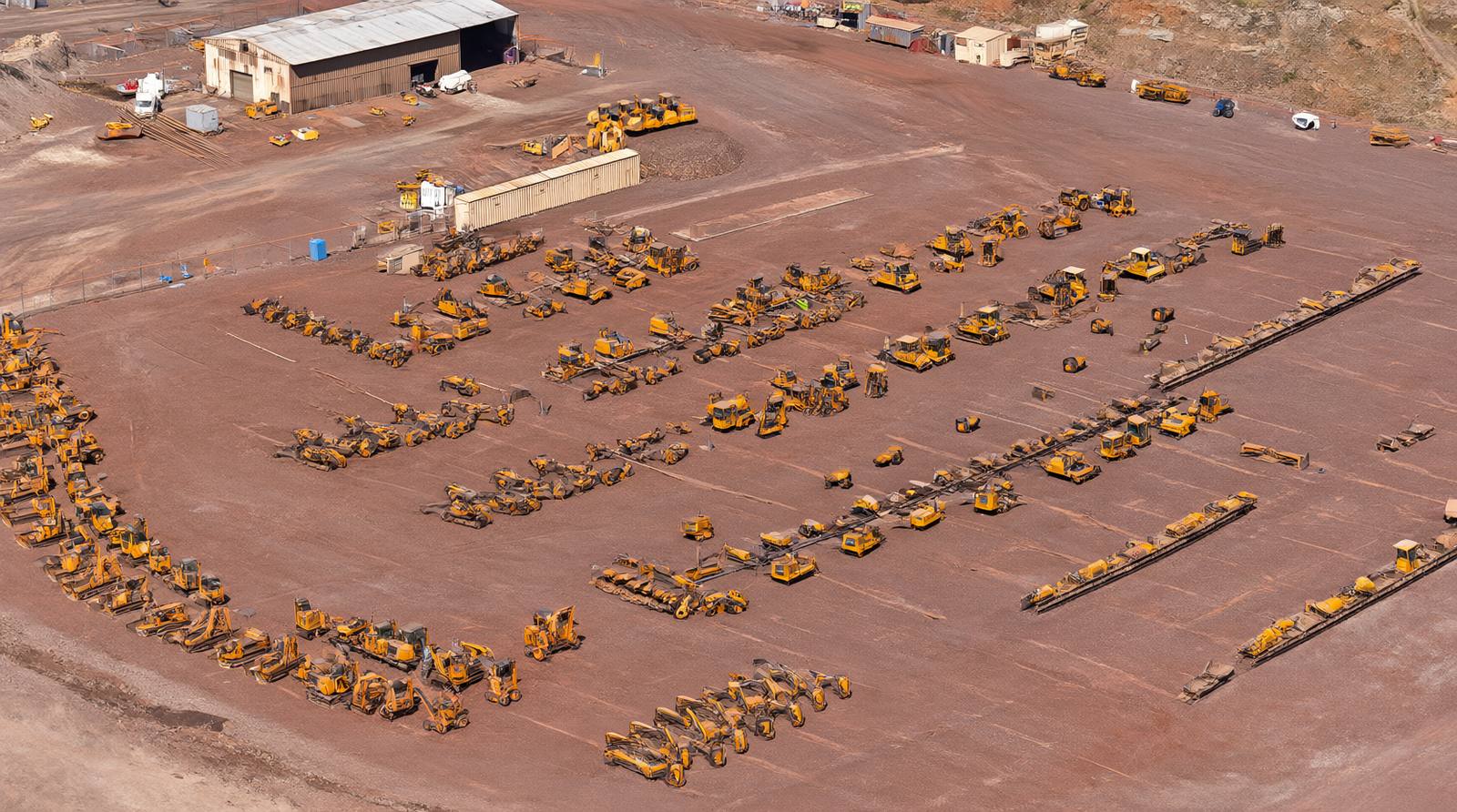
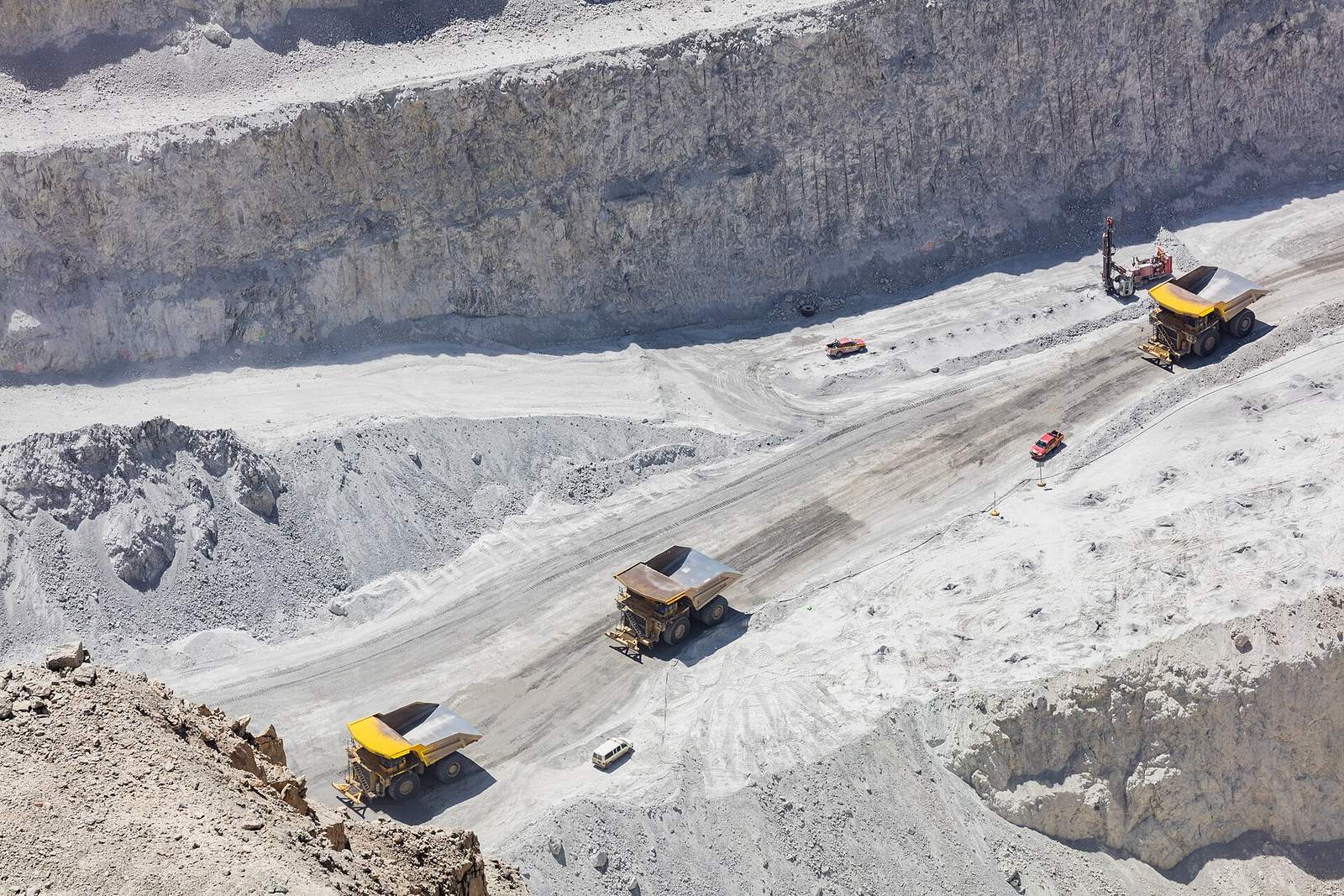
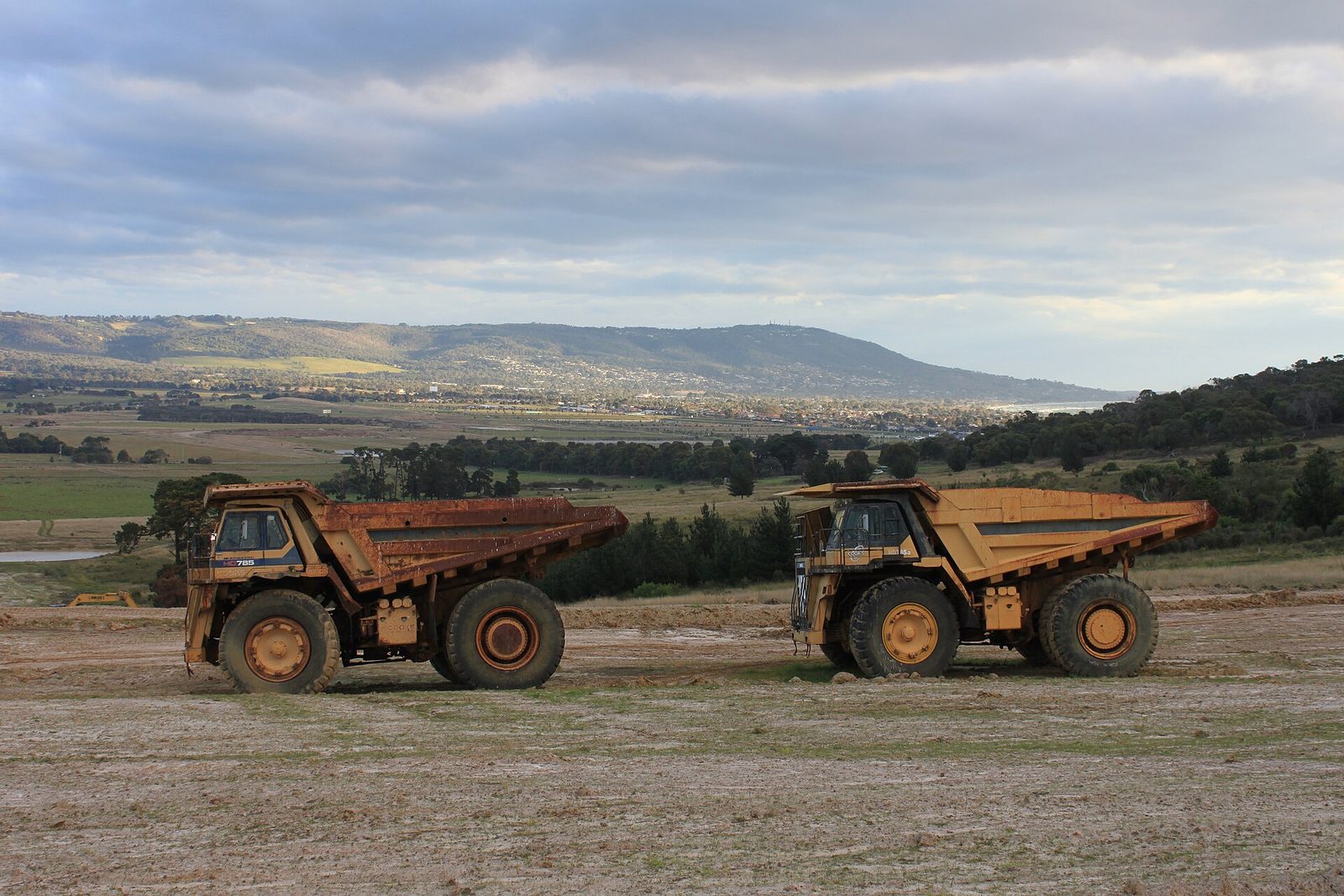
It covers surface mines. A trackless mobile machine is “any self propelled mobile machine that is used for the purpose of performing mining, transport or associated operations underground or on surface at a mine”. Haul trucks, dozers, loaders, graders, water bowsers, drill rigs and site bakkies all fall inside it. Draglines, rail-bound equipment and track-mounted conveyors are excluded.
The mine sets the procedure and the operator does the check. The regulation puts the procedure on the employer, which section 102 of the Act defines as the owner: in the first place, the holder of the prospecting permit or mining authorisation. The regulation does not distinguish between the mine’s own machines and a contractor’s. The operator does the physical check and fills in the list.
The criteria are set in advance. The checklist must say, item by item, when the machine may or may not move. An operator should not have to decide on the day whether a cracked mirror stops the truck.
Road-licensed vehicles are not exempt from pre-starts. Regulation 8.10.28 exempts vehicles licensed under the National Road Transportation Act and not used for primary mining activities from regulations 8.10.23 and 8.10.27, which deal with operator training, licensing and carrying the licence. The pre-use inspection in 8.10.24 is not on that list.
Two of the general machinery regulations in 8.8 also bear on the pre-start (MHSC consolidated text, printed 2018, read 25 Sep 2026). Regulation 8.8(3)(d) requires that “machinery is only operated if all installed safety devices are operational and functional”. Regulation 8.8(5)(a) requires that when a compression ignition (diesel) engine system “is found to have any defect which may cause a significant risk to the safety or health of persons, the use of such engine system is discontinued immediately”.
What the Chief Inspector’s guideline adds
Mines prepare a mandatory code of practice for trackless mobile machines to the Chief Inspector of Mines’ guideline DMR 16/3/2/2-B2, effective 31 August 2015. The guideline states that “failure by the employer to prepare or implement a COP in compliance with this guideline is a breach of the MHSA” (DMR guideline 16/3/2/2-B2, read 25 Sep 2026). On maintenance and inspection, the code must describe:
- “The use of pre-use checklists to identify components critical for the safe operation of the type of trackless mobile machines and keeping of such completed checklists for at least three months.”
- “The conditions under which trackless mobile machines may be used, for example ‘go’, ‘go but’ or ‘no go’ options.”
- Under operating procedures, “safe start-up, operation, parking and shut-down procedures”.
The “go but” category matters in practice. It lets a machine work with a recorded defect that does not affect safety, such as a torn seat cover, while the defect waits for the workshop. Without it, operators either park machines for trivial faults or stop writing faults down.
The code of practice belongs to the mine. A contractor should ask for the mine’s pre-use checklist and criteria before its machines arrive, and make sure its own forms meet them.
The operator’s duties under the Act
The Mine Health and Safety Act gives the operator two duties that shape the pre-start. Section 22(d) requires every employee to “report promptly to their immediate supervisor any situation which the employee believes presents a risk to the health or safety of that employee or any other person, and with which the employee cannot properly deal”. Section 23(1) gives the employee the right to leave a working place where circumstances “appear to that employee to pose a serious danger”. A pre-start form with a clear “no go” and a named supervisor to report to puts both into practice.
What the manufacturer’s walkaround adds
The regulations set the minimum. The operation and maintenance manual for each machine sets the daily checks for that model, and a good pre-start form uses both.
Komatsu’s excavator manual tells the operator to “walk around the machine and look at the underside of chassis for anything unusual like loose bolts and nuts, leakage of fuel, oil and coolant” before starting the engine, and lists daily checks including the seat belt, mirrors, windows and handrails (Komatsu OMM TEN00691-03, read 25 Sep 2026). Caterpillar’s loader manual calls for “a thorough daily inspection before you operate the machine”, including leaks, guards, hoses and belts, and ends with “Make the needed repairs before you operate the machine” (Caterpillar OMM SEBU7494-06, read 25 Sep 2026). Its daily service list includes a backup alarm test.
What a pre-start covers, by machine class
The table combines the regulation items with the manufacturers’ walkaround. The right-hand column shows where an item traces to the regulations. Items marked “risk assessment” are required where the mine’s risk assessment calls for them. Build your own list from the mine’s code of practice and the machine’s manual.
| Item | Haul truck (rigid, ADT) | Excavator, loader, dozer | Grader, water bowser | Drill rig | Light vehicle | Traces to |
|---|---|---|---|---|---|---|
| Service and park brake test | Yes | Yes | Yes | Yes (tram) | Yes | 8.10.24.1, 8.10.7, 8.10.26 |
| Lights, beacons, indicators | Yes | Yes | Yes | Yes | Yes | 8.10.24.1, 8.10.14 |
| Horn and reverse alarm | Yes | Yes | Yes | Yes | Yes | OEM daily list |
| Mirrors, cameras, windows | Yes | Yes | Yes | Yes | Yes | 8.10.8; OEM walkaround |
| Seat belt | Yes | Yes | Yes | Yes | Yes | OEM walkaround |
| Collision warning or proximity system self-test | Where fitted | Where fitted | Where fitted | Where fitted | Where fitted | 8.10.2 (opencast, significant risk) |
| ROPS and FOPS condition | Yes | Yes | Yes | Yes | Where fitted | 8.10.4, 8.10.5 (risk assessment) |
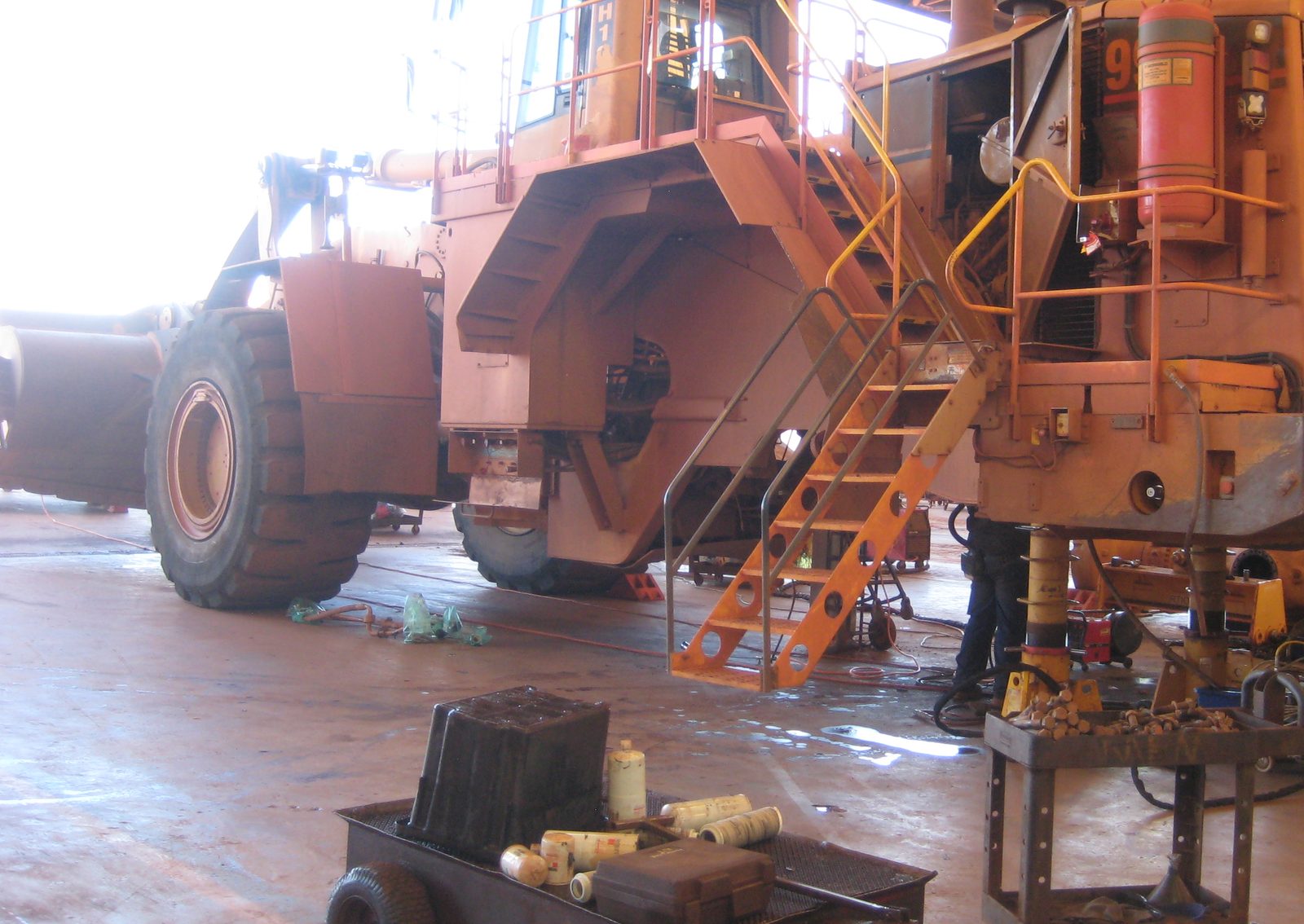
| Steps, handrails, access | Yes | Yes | Yes | Yes | n/a | 8.10.13; OEM walkaround |
| Tyres, rims and wheel nuts, or tracks | Tyres | Tyres or tracks | Tyres | Tracks | Tyres | 8.10.12; OEM walkaround |
| Leaks: fuel, oil, coolant, hydraulic | Yes | Yes | Yes | Yes | Yes | 8.8(5)(a); OEM walkaround |
| Fluid levels | Yes | Yes | Yes | Yes | Yes | OEM daily list |
| Fire extinguisher or suppression system | Yes | Yes | Yes | Yes | Where fitted | Mine code of practice |
| Work equipment: body, bucket, blade, mast | Body and hoist | Bucket, linkage, pins | Blade, spray bars | Mast, rod handling, emergency stops | n/a | 8.8(3)(d); OEM walkaround |
| Hour meter reading | Yes | Yes | Yes | Yes, plus rock drill meter | Odometer | Links the check to the service plan |
What happens to a failed pre-start item
The pre-start earns its time when a failed item is fixed before the machine runs again. The loop has six steps:
- Stop or flag. The operator applies the pre-set criteria: “no go” means the machine does not move; “go but” means it works with the defect recorded.
- Report the same shift. The operator tells the foreman or supervisor, in line with section 22(d), and the defect goes to the workshop with the machine number, hour meter reading and the operator’s words.
- Tag and isolate a no-go machine. Follow the mine’s isolation and lockout procedure under regulation 8.10.16 so nobody starts it.
- Open a job card. The workshop records the fault, the repair, the parts and the hours on a job card that quotes the pre-start it came from.
- Release in writing. An authorised person signs the machine back into service after any test the repair needs, such as a brake test.
- Close out on the next pre-start. The next operator confirms the item passes. A “go but” defect that appears on the same machine for a week without a job card is a management failure, and it is visible on the forms.
The last step also carries the defect across a shift change. For how to pass open defects from one shift to the next, see shift handover.
Pre-start checklist: what a useful form includes
Paper forms meet the rule. Their weak point is the trip from the cab to the workshop: a defect written on a sheet only gets fixed once someone in the workshop reads it. Decide who collects the forms each shift, and when, and check that every “no go” and “go but” on them has a job card by the end of that shift.
Common questions
Is a pre-start check a legal requirement on a South African mine?
Yes, for trackless mobile machines. Regulation 8.10.24 requires the employer to have a procedure for inspecting them immediately before use, with a physical check of brakes, lights and other defined safety features by the operator and a checklist completed at the start of every shift.
Do pre-start rules apply to bakkies and light vehicles on a mine?
They apply to any self-propelled machine used for mining, transport or associated operations at the mine, which includes light vehicles used on site. The exemption in regulation 8.10.28 for road-licensed vehicles covers only the operator licensing rules in 8.10.23 and 8.10.27, not the pre-use inspection.
How long must completed pre-start checklists be kept?
The Chief Inspector’s guideline for the trackless mobile machine code of practice says the code must provide for keeping completed pre-use checklists for at least three months. Check your mine’s own code of practice, which may set a longer period.
Sources
- Government Gazette 38493, No. R. 125 of 27 Feb 2015, regulation 8.10 (trackless mobile machinery), read 25 Sep 2026
- Mine Health and Safety Council, Mine Health and Safety Act 29 of 1996 and Regulations (printed 2018), read 25 Sep 2026
- DMR, Guideline for a mandatory code of practice for trackless mobile machines, DMR 16/3/2/2-B2, read 25 Sep 2026
- Komatsu, Operation & Maintenance Manual TEN00691-03, PC45MR-5 / PC55MR-5, read 25 Sep 2026
- Caterpillar, Operation and Maintenance Manual SEBU7494-06, read 25 Sep 2026