Maintenance Guide Global
Availability and utilisation in mining: the KPI formulas
Availability is the share of required time a machine was fit to work; utilisation, the share it worked. Formulas, a worked month and why figures differ.
Contents 9 sections
Availability is the share of the required time a machine was fit to work, and utilisation is the share of that time it was actually worked. Mechanical availability, physical availability and use of availability each divide a different slice of the same month, so one machine can report three different percentages and all of them can be correct.
The figures only agree between two parties when both use the same time categories. A public set written for surface mining equipment is the time usage model published by the Global Mining Guidelines Group (GMG) in 2020, which this guide follows (GMG time classification framework, read 25 Sep 2026).
The GMG time usage model
GMG starts from the premise that the operation “should account for all time”. Every hour in the period goes into one category, and each category is carved out of the one above it. The definitions below are GMG’s own words from sections 8.3 and 8.4 of the guideline.
| Category | GMG definition, with GMG’s examples | How it is calculated |
|---|---|---|
| Calendar time | “The total time available.” | 24 hours × days in the period |
| Unscheduled time | “The equipment is not scheduled or assigned in the system because it is not required due to external events.” Examples: for a contractor, time when no work exists; statutory holidays; a planned shutdown; mobilisation and demobilisation; a major rebuild | Recorded |
| Scheduled time | “The equipment is required to meet business plan objectives and is assigned to an operation, project, or job.” | Calendar time - unscheduled time |
| Downtime | “The equipment is required but is not in a condition to perform its intended function.” | Recorded |
| Available time | “The equipment is required and is in a condition to perform its intended function.” | Scheduled time - downtime |
| Operating standby | “The equipment is available but not operating, and there is no immediate intent to operate due to a management decision or reasons within management control.” Examples: no operator, shift change, lunch and coffee breaks, safety meeting | Recorded |
| External standby | “The equipment is available, required, and committed to a project or site, but it cannot be operated for reasons that are out of the immediate influence of operating management control.” Examples: work area not available, a drill waiting for its drill area | Recorded |
| Operating time | “The equipment is available and under the control of a human or system.” | Available time - (operating standby + external standby) |
| Operating delay | “The equipment is operating but temporarily stopped or prevented from performing work due to delays that are inherent to the operation or the immediate physical and environmental conditions.” Examples: fuelling, lube, blasting | Recorded |
| Working time | “The equipment is operating as assigned, performing its intended function, and carrying out activities that do and do not directly contribute to production.” | Operating time - operating delay |
| Non-productive time | “The unavoidable activities that do not directly contribute to production but are required to enable continued safe and efficient operation.” Examples: face clean-up, repositioning | Recorded |
| Productive time | “The equipment is performing its intended function and is carrying out activities that directly contribute to production.” | Working time - non-productive time |
GMG notes that operating time is commonly called gross operating hours and working time net operating hours. External standby is the category closest to standing time in a contract, since GMG’s own example is a client asking a contractor to stand down while staying on call. GMG’s unscheduled time means the machine was not required. It has nothing to do with unscheduled maintenance.
GMG left downtime without subcategories. It says many models split scheduled and unscheduled maintenance, but “there is currently little consensus on how to classify these”. A contract has to close that gap in its own definitions.
Availability and utilisation formulas
GMG’s Table 3 defines the key performance indicators from these categories. The definitions are recommendations, which the guideline says are “not intended to be industry standards”.
| KPI | Formula | What it answers |
|---|---|---|
| Uptime | Available time ÷ calendar time | How much of the whole period was the machine fit to work? |
| Calendar availability | (Calendar time - downtime) ÷ calendar time | GMG’s suggested alternative to uptime, without the effect of unscheduled time |
| Physical availability | Available time ÷ scheduled time | Of the time it was required, how much was it fit to work? |
| Mechanical availability | Operating time ÷ (operating time + downtime) | Of the time it was either working or down, how much was it working? |
| Use of availability | Operating time ÷ available time | Of the time it was fit to work, how much did the operation use? |
| Asset utilisation | Operating time ÷ calendar time | How much of the whole period did it operate? |
| Operating utilisation | Operating time ÷ scheduled time | How much of the required time did it operate? |
| Effective utilisation | Working time ÷ scheduled time | How much of the required time did it do its intended job? |
| Operating efficiency | Working time ÷ operating time | How much operating time was lost to operating delays? |
| Production effectiveness | Productive time ÷ operating time | How much operating time went directly into production? |
Two relationships are useful. Physical availability multiplied by use of availability equals operating utilisation, because available time cancels. And mechanical availability leaves standby out of both the top and the bottom of the fraction, so it isolates maintenance. GMG says it “can be used to identify the impact of maintenance on the operation”, while physical availability “reflects the impact of Standby Time”.
GMG traces these definitions to the Surface Mining Association for Research and Technology model (around 1999) and to the first and second editions of Surface Mining (Pfleider, 1968; Kennedy, 1990). It reports that the mechanical and physical availability definitions are “relatively consistent among the contributors”.
Worked example: one excavator, one month
Why contractor and client figures disagree
The textbook Open Pit Mine Planning and Design says there is “little consistency” in how these terms are used and calculated (CRC Press, 3rd edition, 2013, chapter 16). In its words, “‘Availability’ to one mining company may not have the same meaning to another mining company or to a supplier of mining equipment”. The same excavator month, reported under definitions a contractor or a client might use:
The spread runs from 89.4% to 94.5% for one machine in one month. The differences come from four decisions:
- Planned services. GMG downtime covers any time the machine is required but not fit to work. ISO 14224 treats preventive maintenance as a down state too (ISO 14224:2016, 3.15). A contract that excludes planned services from downtime reports a higher figure. GMG puts a major rebuild in unscheduled time, outside downtime.
- The time base. Calendar time, scheduled time and operating time plus downtime give three different denominators.
- Who owns standby. GMG puts “no operator” in operating standby. If the contractor supplies operators, the client may treat that time as the contractor’s loss. GMG’s example of external standby is a client asking a contractor to shut down for lack of work while staying on call, time that would be “off hours” for billing.
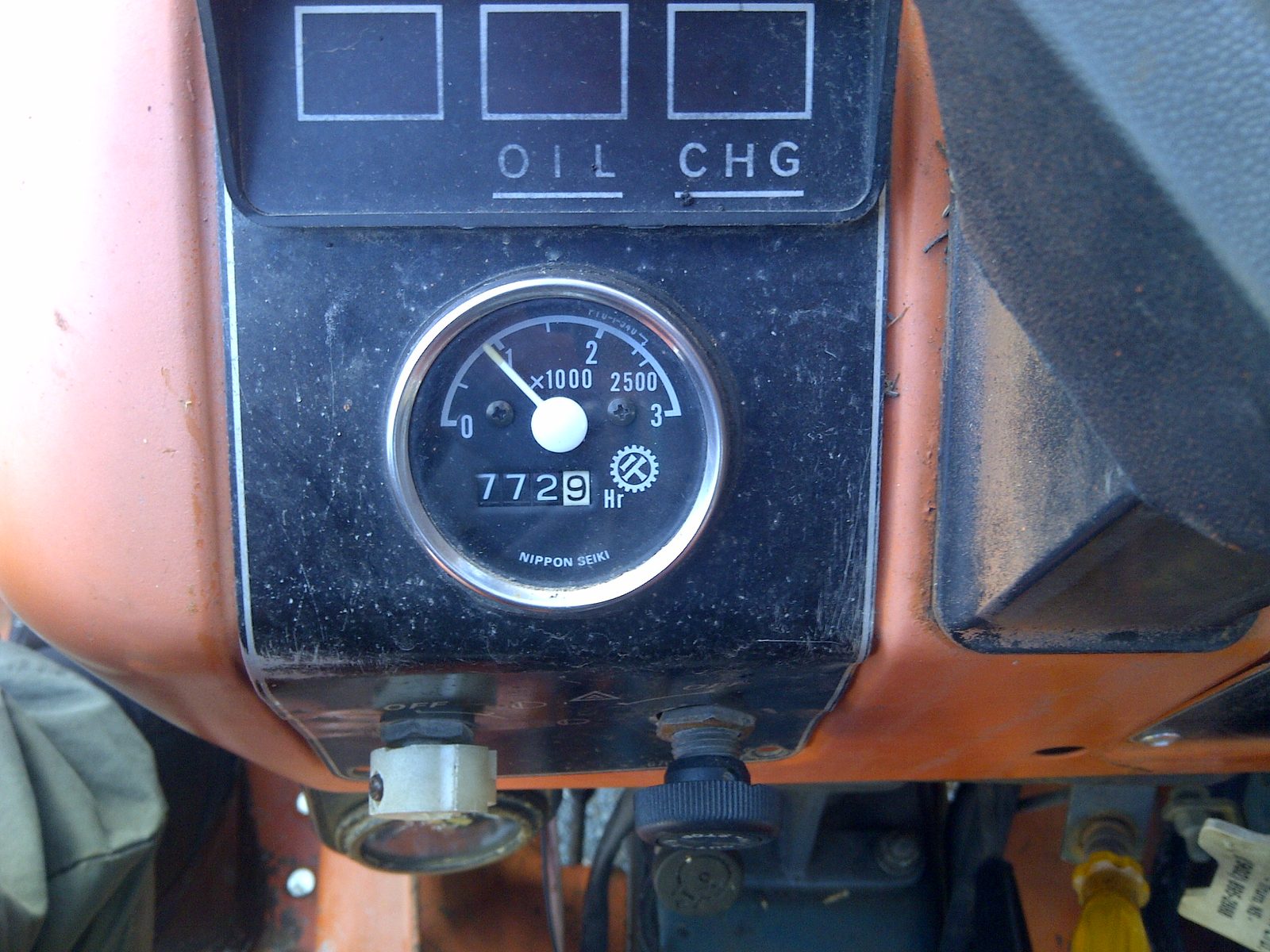
- The meter. Engine hours record when the engine ran, including standby and warm-up. If the excavator’s hour meter shows 585 hours, use of availability becomes 585 ÷ 636 = 92.0% against 84.9% from the time model. GMG notes that the meaning of “operating hour” varies across the industry. Hour meters are covered in engine hours and hour meters.
Where MTBF and MTTR fit
The time model says how much downtime there was. It does not say how often the machine broke or how long each stop took. MTBF (operating time ÷ failures) and MTTR (repair time ÷ repairs) supply that. Together they give inherent availability, MTBF ÷ (MTBF + MTTR), as defined in the US Department of Defense reliability guide (DoD RAM guide, 2005, Table 3-4).
Inherent availability counts only failures and active repair. The same guide defines operational availability using mean downtime, which includes waiting for parts, people and administration. Mechanical availability on a mine sits closer to the operational measure, because the downtime category holds every hour the machine was not fit to work.
GMG says maintenance detail such as downtime reasons and failure causes is better captured in maintenance management and work order systems than in the time model. In practice that means the job card record and the time model have to agree on the hours. Some operations keep both in one place, for example in a site record that holds machine hours, availability and job cards.
OEE in mining
Overall equipment effectiveness comes from manufacturing. One published South African application is a case study at Mogalakwena platinum mine in the SAIMM Journal. It used:
OEE = availability × use of availability × productivity × quality
Productivity there is “expressed as operating tempo” (Fourie, 2016, Journal of the SAIMM vol. 116). The first two terms come straight from the time model. The other two need a production rate target and a quality measure, which the time model does not hold.
GMG lists a standard OEE definition “applicable to surface mining” as future work, along with production-loss categories measured in tonnes or bank cubic metres per hour against forecast. Until that exists, any OEE figure needs its four definitions written beside it.
What to agree before the contract starts
Common questions
What is the difference between mechanical and physical availability?
In the GMG definitions, physical availability divides available time by scheduled time, so standby counts as available. Mechanical availability divides operating time by operating time plus downtime, so standby drops out of both sides and the figure shows the effect of maintenance.
What is use of availability?
Use of availability is operating time divided by available time. It shows how much of the time a machine was fit to work that the operation actually worked it.
Do planned services count against mechanical availability?
Under the GMG definitions, yes: downtime covers any time the machine is required but not fit to work, planned or not. A contract may count breakdowns only, so it has to say which.
Is there a standard definition of OEE for mining?
Not yet. The Global Mining Guidelines Group lists a standard OEE definition for surface mining as future work. A SAIMM case study at Mogalakwena platinum mine multiplied availability, use of availability, productivity and quality.
Sources
- A Standardized Time Classification Framework for Mobile Equipment in Surface Mining: Operational Definitions, Time Usage Model, and Key Performance Indicators (version 13 Jul 2020, published 31 Aug 2020), Global Mining Guidelines Group, read 25 Sep 2026.
- Guideline publication page, Global Mining Guidelines Group, read 25 Sep 2026.
- Fourie, H. (2016), Improvement in the overall efficiency of mining equipment: a case study, Journal of the Southern African Institute of Mining and Metallurgy, vol. 116, no. 3, read 25 Sep 2026.
- Open Pit Mine Planning and Design, 3rd edition, chapter 16, CRC Press / Taylor & Francis, 2013, read 25 Sep 2026.
- ISO 14224:2016, clause 3 terms and definitions (preview), ISO, read 25 Sep 2026.
- DoD Guide for Achieving Reliability, Availability, and Maintainability (2005), Table 3-4, US Department of Defense, read 25 Sep 2026.