Economics Guide
Cost per tonne in contract mining: what goes into the number
Cost per tonne is the hourly cost of a fleet divided by the tonnes it moves in that hour. What goes into the hourly cost, with a worked example in rand.
Contents 10 sections
Cost per tonne is the full hourly cost of the machines and people on a job divided by the tonnes they move in that hour. The hourly cost is built from owning costs (depreciation, interest, insurance), operating costs (diesel, tyres, maintenance, repairs, wear parts), operator wages and site overheads.
Both halves of the division matter. The cost side is mostly known in advance. The tonnes side changes every shift, and in the worked example below it moves the answer more than diesel does.
Cost per tonne formula
Machine cost per hour = owning cost per hour + operating cost per hour + operator cost per hour
Fleet cost per hour = sum of machine costs per hour + site overheads per hour
Cost per tonne (rand per tonne) = fleet cost per hour / tonnes moved per hour
The Caterpillar Performance Handbook puts the same idea as lowest possible hourly cost over highest possible hourly productivity (Caterpillar Performance Handbook, Edition 50, section 22, read 25 Sep 2026). This guide follows the line items of its owning and operating (O&O) estimating form.
The handbook gives a method for estimating and leaves the prices to you. It says hourly O&O costs vary widely with the work the machine does, the ownership period, local fuel and labour prices, repair costs and interest rates.
Owning costs
Owning cost is what the machine costs you whether it moves a tonne or not.
| Line | How the handbook works it out |
|---|---|
| Depreciation | Delivered price less residual value at replacement, divided by total hours over the ownership period |
| Interest | Average investment x interest rate, divided by hours per year |
| Insurance | Average investment x insurance rate, divided by hours per year, or the known premium divided by hours |
| Property tax | Same form as insurance, where it applies |
Depreciation per hour = (P - S) / total hours
Average investment = [P x (N + 1) + S x (N - 1)] / 2N
Interest per hour = average investment x interest rate / hours per year
Insurance per hour = average investment x insurance rate / hours per year
P = delivered price, S = residual value, N = years owned
Three points from the handbook shape the owning line:
- Depreciation here is a straight-line write-off over the years and hours you expect to use the machine. The handbook says it is not based on tax considerations. Your tax depreciation is a different number for a different purpose.
- Interest counts whether the machine is bought outright or financed. It is the cost of using capital. Some owners carry it in the machine rate and others in overheads. Pick one and do not count it twice.
- Tyres on wheeled machines are an operating cost. The handbook treats them as a wear item, so its method deducts the tyres’ replacement cost from the delivered price before working out depreciation.
The hours per year you assume drive every line in this table. A machine that works fewer hours carries the same capital over fewer hours, so its owning cost per hour rises.
Operating costs
Operating cost is what the machine costs you for each hour it runs.
| Line | What goes in | Where the number comes from |
|---|---|---|
| Fuel | Litres per hour x price per litre | The handbook says fuel burn should be measured in the field |
| Planned maintenance | Lube oils, filters, grease and the labour to fit them | Service intervals in the machine’s manuals |
| Tyres or undercarriage | Replacement cost divided by life in hours | Your own tyre and undercarriage history |
| Repairs | Components and major repairs, averaged per hour | Your workshop records and dealer estimates |
| Special wear items | Cutting edges, bucket teeth, ripper tips, body liners, boom and stick welding | Cost divided by life on your ground |
On repairs, the handbook notes that a repair before a major component fails can cost one third of the same repair after failure. That is why repair cost per hour depends on maintenance practice as much as on the machine.
On tyres, the handbook says the best estimate comes from your own tyre life records and the price you actually pay.
Labour and overheads
The operator’s wage goes in per machine hour and should include benefits. Where a machine runs two or three shifts, that means the cost of every operator the machine needs across the day, divided by the hours it works.
Site overheads sit outside the machine rates: supervision, light vehicles, water bowsers, site establishment, safety and training, and a share of head office. They are real costs per hour of the job even though no single machine carries them. Leave them out and a rate can look profitable on paper when it is not.
From cost per hour to cost per tonne
Divide by what the fleet actually moves, over the same hours you costed.
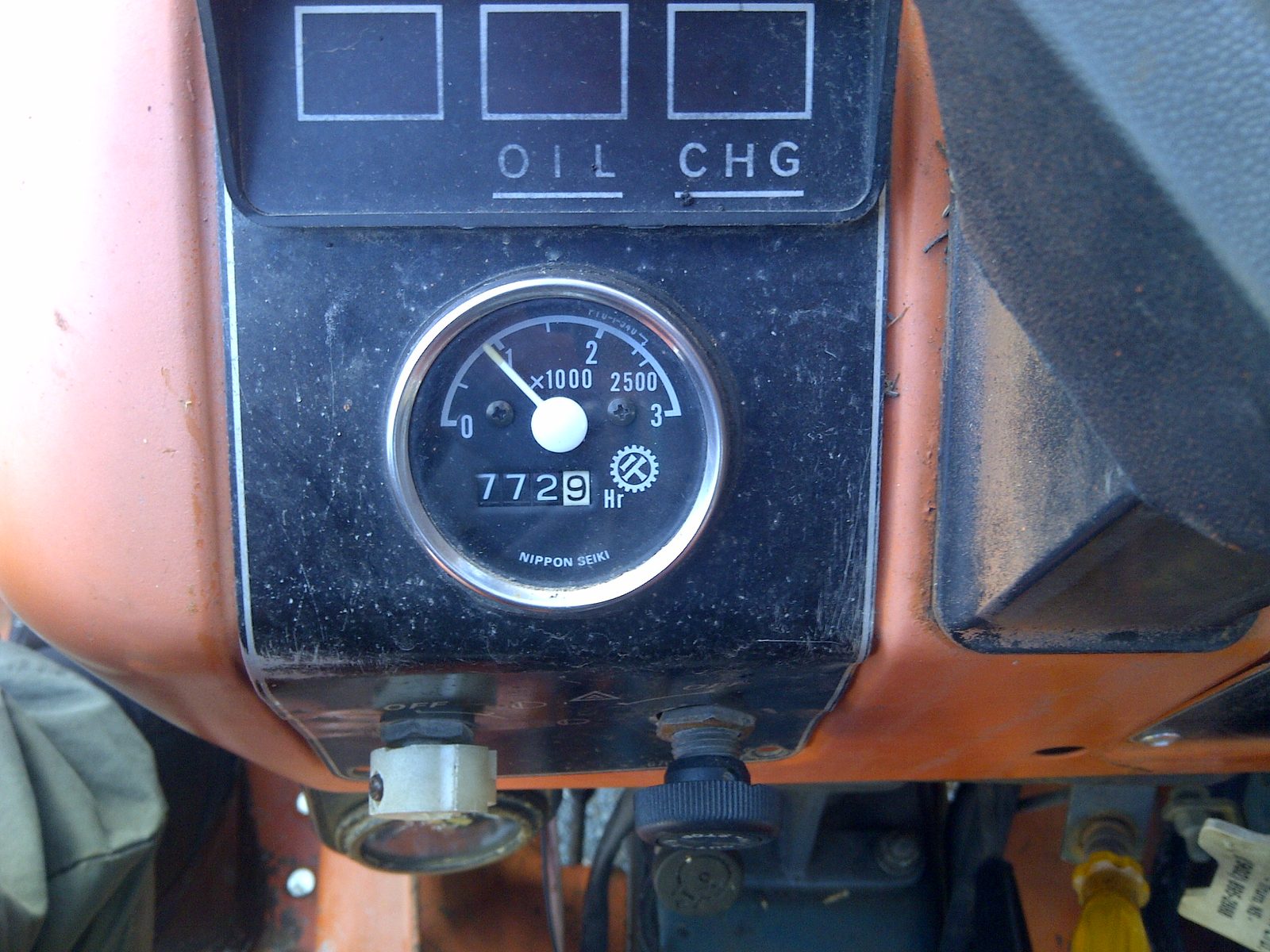
- Hours. The handbook’s O&O method counts clock or operating hours. Service meter units are a separate count. If your costs are per engine hour and your production is per shift hour, the result is wrong. See engine hours, SMR and hour meters.
- Productivity. Production equals load per cycle times cycles per hour. Rated outputs assume ideal cycles. Use measured production, which includes waiting, delays and poor fills. Several of the handbook’s own production examples assume a 50-minute working hour, which it describes as 83% job efficiency.
- Availability and use. Hours lost to breakdowns and standing reduce tonnes but leave most owning costs in place. See availability and utilisation.
- BCM or tonnes. The handbook notes that coal overburden is generally calculated in bank cubic metres. Convert with the bank density before you compare a cost per tonne against a rate per BCM. See BCM.
Worked example: one excavator and four haul trucks
Sensitivity: diesel against productivity
The fleet burns 215 litres an hour, so every R1 change in the litre price moves the fleet’s cost by R215 an hour. The table keeps every other input from the worked example and changes only the diesel price and the tonnes per hour.
| Tonnes per operating hour | Diesel R26.17 per litre (August 2026) | Diesel R29.11 per litre (September 2026) | Diesel R32.05 per litre (illustrative) |
|---|---|---|---|
| 500 | R35.66 per tonne | R36.92 per tonne | R38.18 per tonne |
| 600 | R29.71 per tonne | R30.77 per tonne | R31.82 per tonne |
| 700 | R25.47 per tonne | R26.37 per tonne | R27.27 per tonne |
R26.17 is the August 2026 inland price before the September increase (Daily Maverick). R32.05 assumes a second increase the same size as September’s and is illustrative only.
One more line from the same example: if the fleet works 4,000 hours a year instead of 5,000, owning cost rises by R1,116.25 an hour across the five machines. At 600 tonnes an hour that adds R1.86 per tonne.
What moves cost per tonne most
In this example, the September diesel increase of R2.94 a litre added R1.05 per tonne at 600 tonnes an hour. Losing 100 tonnes an hour of production added R6.15 per tonne at the same diesel price.
Diesel is the largest single line in this example. Productivity moves the result more, and it depends on loading time, queueing at the excavator, haul road condition, payloads and delays between shifts. Those are the numbers worth measuring every shift, alongside litres. The diesel refund also changes the effective diesel price for eligible activities, so price it in once you know what you can claim.
Two habits keep the number honest:
- Cost and production over the same hours. Operating hours on the cost side, tonnes from the same operating hours on the other.
- Your own figures over the handbook’s. The handbook gives the method. Fuel burn, tyre life, repair cost and payload come from your own records.
Those records work best when they describe the same shifts, as argued in a piece on one set of site numbers for production, fuel and cost.
Common questions
What is included in owning and operating cost?
Owning cost is depreciation, interest on the money tied up in the machine, insurance and any property tax. Operating cost is fuel, planned maintenance, tyres or undercarriage, repairs and wear parts. The operator’s wage, with benefits, is added on top.
How do you turn cost per hour into cost per tonne?
Divide the fleet’s total cost for an operating hour by the tonnes it moves in that hour. Use measured production for the same hours you costed, not the machine’s rated output.
Should cost per tonne use engine hours or clock hours?
Use the same hours on both sides of the division. The Caterpillar handbook’s owning and operating method counts clock or operating hours unless it says otherwise, and keeps service meter units separate.
Sources
- Caterpillar, Caterpillar Performance Handbook, Edition 50 (SEBD0351-50), June 2022, section 22 (Estimating Owning and Operating Costs) and section 25. Read 25 Sep 2026.
- Department of Mineral and Petroleum Resources, Media statement: fuel price adjustments effective from the 2nd of September 2026. Read 25 Sep 2026.
- Lindsey Schutters, SA motorists can’t escape the petrol price pain in September, Daily Maverick, 31 Aug 2026. Read 25 Sep 2026.