Load factor: turning loose volume into bank cubic metres
Load factor converts loose cubic metres to bank cubic metres: LF = 100% ÷ (100% + % swell). Formula, handbook values and a truck load example.
Definition
Load factor
In earthmoving, the load factor is the number you multiply a loose volume by to get the equivalent bank volume, and it equals 100% divided by (100% plus the material's swell percentage).
Contents 5 sections
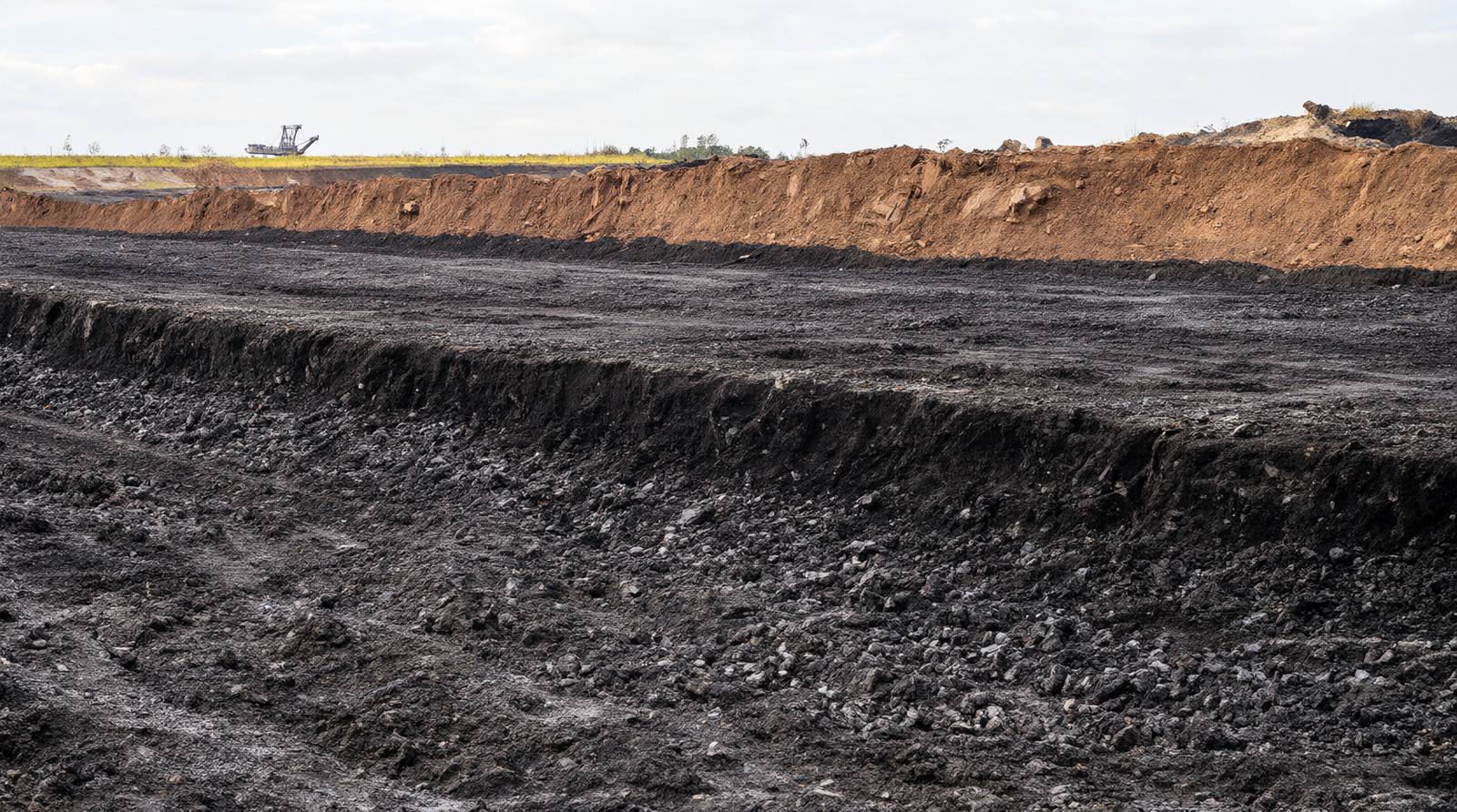
Load factor is the shortcut from what a machine carries to what the survey pays for. Buckets and truck bodies are rated in loose cubic metres, while the handbook says earthmoving and coal overburden quantities are generally worked out as bank volume (Caterpillar, p. 25-1). Every load count therefore passes through this number before it becomes a BCM figure.
Caterpillar’s handbook describes it as the alternative to dividing by (1 + swell): “the loose volume can be multiplied by the load factor” (Caterpillar Performance Handbook 50, p. 25-2, read 25 Sep 2026).
Load factor formula
Load factor (L.F.) = 100% ÷ (100% + % swell)
Load (BCM) = load (LCM) × L.F.
Estimated payload (kg) = load (LCM) × L.F. × bank density (kg per BCM)
The third line is how the handbook’s own production example estimates a scraper payload: 24 LCM × 0.80 × 1,770 kg per BCM gives 33,984 kg, which the handbook rounds to 34,000 kg (p. 25-13). It gets the same answer as multiplying loose volume by loose density, without needing a loose density.
Load factor for a given swell
The handbook tabulates the relationship on page 27-1. A selection:
| Swell | Voids | Load factor |
|---|---|---|
| 20% | 16.7% | 0.833 |
| 30% | 23.1% | 0.769 |
| 40% | 28.6% | 0.714 |
| 50% | 33.3% | 0.667 |
| 60% | 37.5% | 0.625 |
| 70% | 41.2% | 0.588 |
Its weight of materials table then lists a load factor against each material (p. 27-6). Values include 0.81 for dry clay, 0.75 for shale, 0.74 for raw bituminous coal, 0.67 for basalt, 0.61 for broken granite, 0.60 for sandstone and 0.59 for broken limestone. Treat them as starting values: the table is footnoted as varying with the material, and a site should replace them with factors tested on its own benches.
Where the load factor enters the count
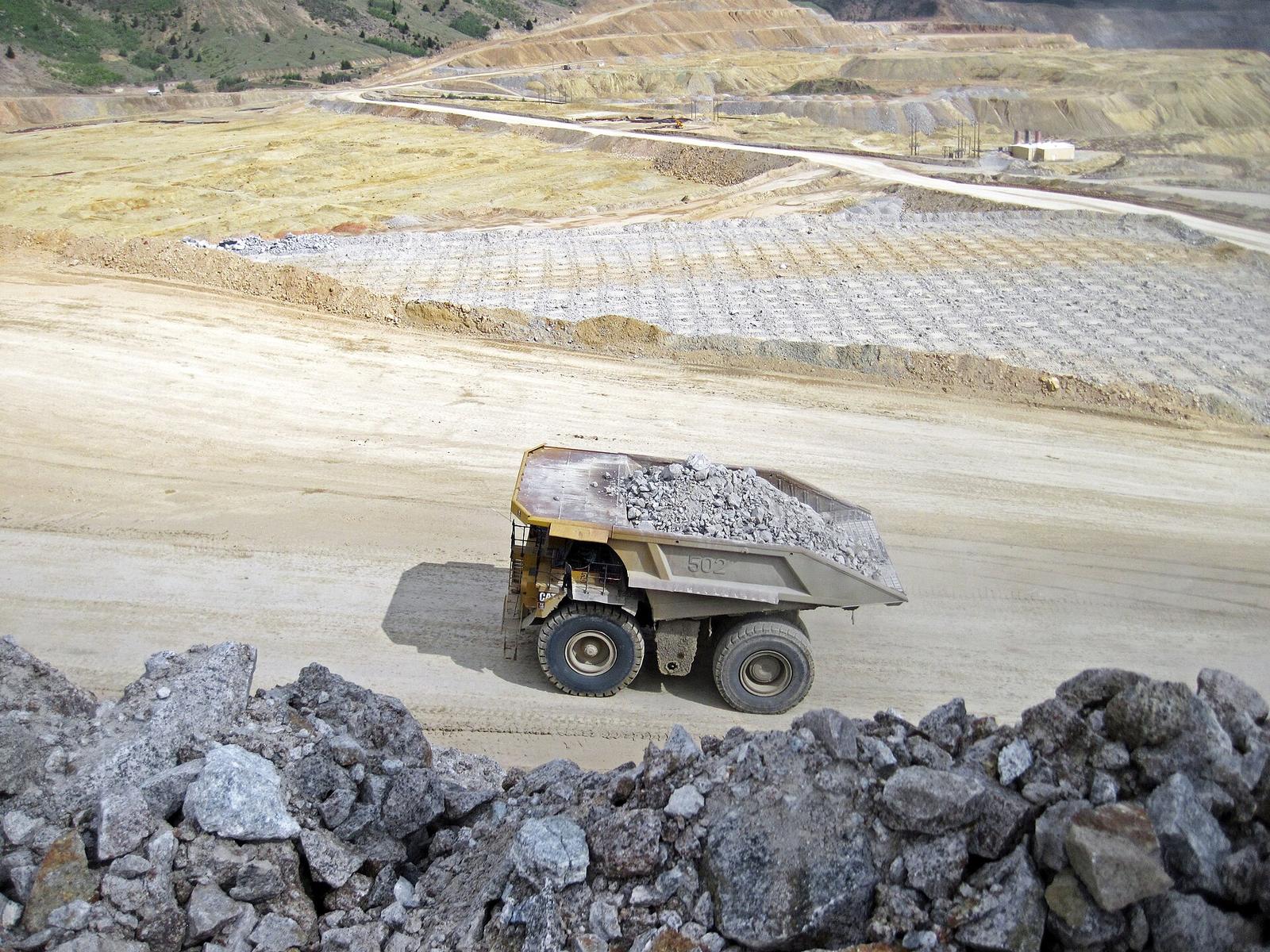
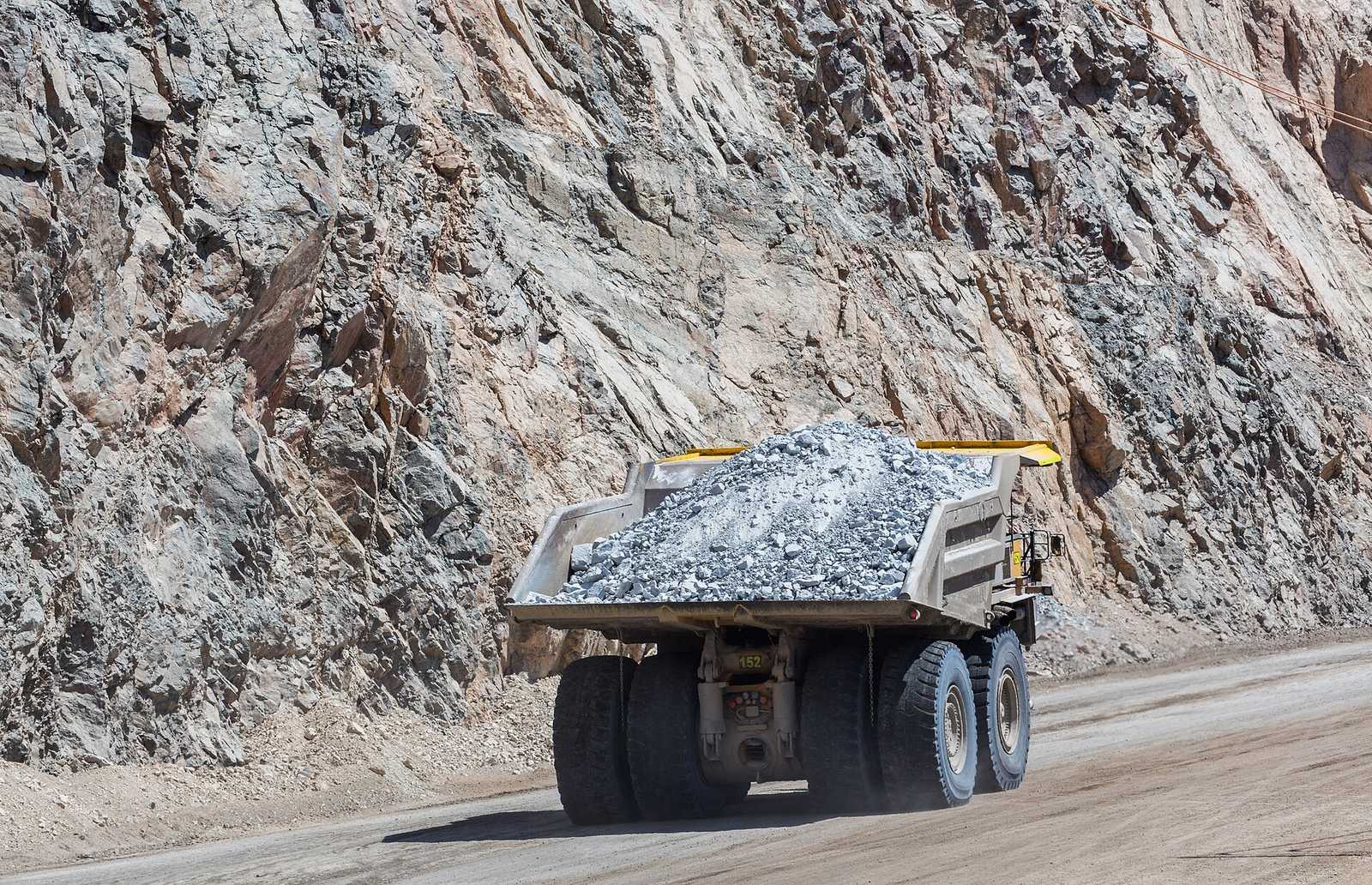
On a truck count, the chain runs: rated body volume, times fill, times load factor, times number of loads. A small error in the load factor repeats on every load for the whole month.
The survey pickup needs no load factor, because it compares surveyed surfaces at the start and end of the period. That makes it the check on whether the factor in the load count is still right. When the two drift apart month after month, the load factor is the first number to retest. The volume states behind all of this are covered in the BCM entry.
Common questions
Why is the load factor always less than 1?
Because dug material takes more space than it did in the ground. A loose cubic metre holds less than one bank cubic metre of material, so the multiplier that converts loose to bank is below 1. A material with no swell would have a load factor of exactly 1.
Is load factor the same as fill factor?
No. Load factor converts loose volume to bank volume. Fill factor is the share of a bucket or body’s rated volume that is actually filled; Caterpillar notes buckets often exceed 100%. A production estimate can use both.
Does load factor have anything to do with engine load?
Not in this sense. Caterpillar’s handbook also uses the phrase engine load factor, which it links to fuel burn. That is an engine measure and has nothing to do with converting material volumes.
Sources
- Caterpillar, Caterpillar Performance Handbook, Edition 50 (SEBD0351-50), June 2022, pages 25-2, 25-3, 25-13, 27-1 and 27-6, and the wheel tractor-scraper section. Read 25 Sep 2026.