Load, haul & blast Glossary Global
Grade resistance: what a ramp costs a haul truck
Grade resistance is the force to climb a slope: 10 kg per tonne of gross weight for each 1% of grade. Formula, degrees to percent, a pit ramp example.
Definition
Grade resistance
Grade resistance is the extra force a machine must overcome to move up a slope, equal to about 10 kg for every tonne of gross machine weight for each 1% of grade.
Contents 5 sections
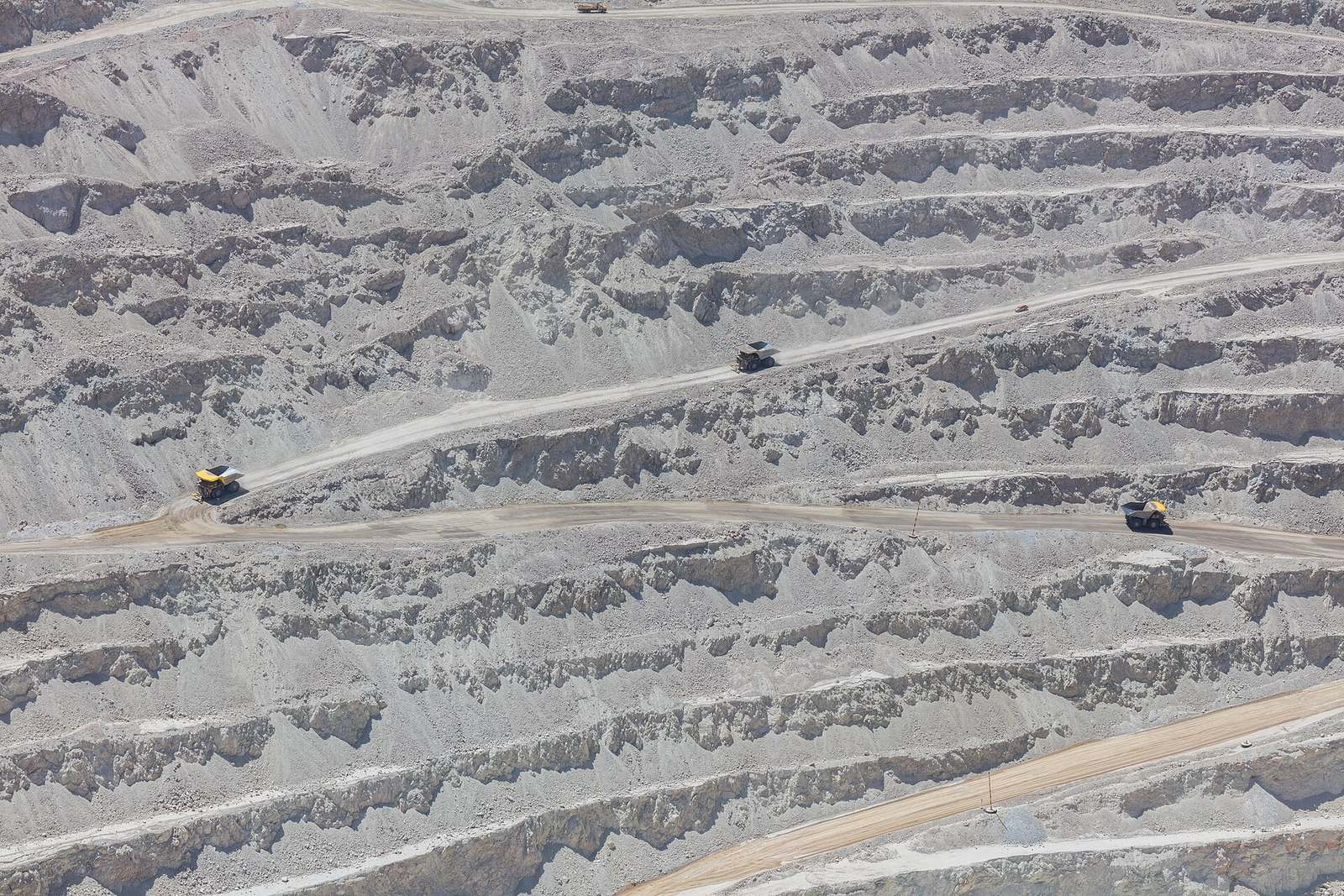
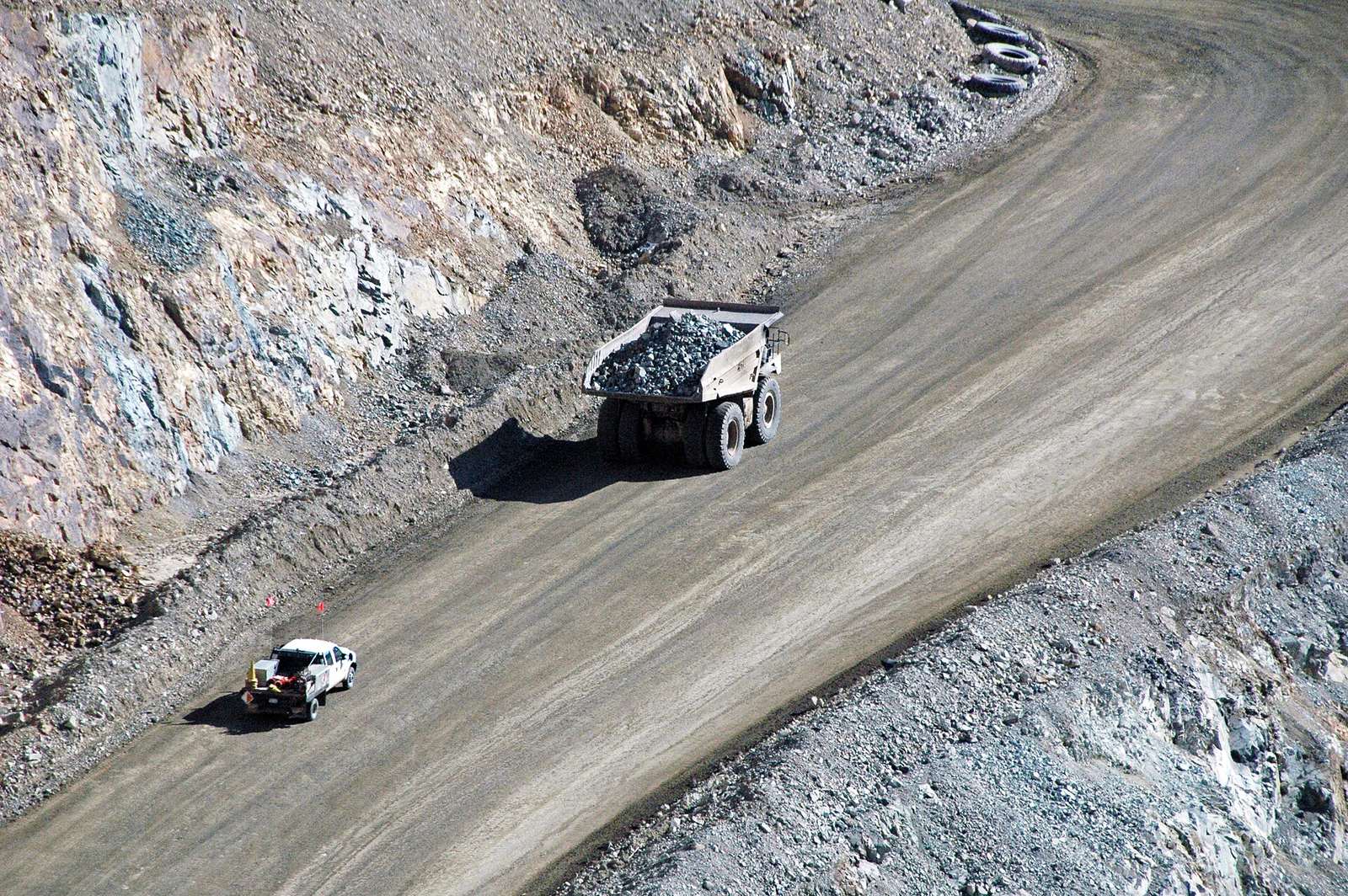
Grade resistance is gravity pulling a loaded truck back down the ramp. It depends only on the slope and the machine’s weight, so unlike rolling resistance no amount of grading or watering reduces it. The ramp design fixes it.
Caterpillar states the rule as “for each 1% increment of adverse grade an additional 10 kg (20 lb) of resistance must be overcome for each metric (U.S.) ton of machine weight” (Caterpillar Performance Handbook 50, p. 25-8, read 25 Sep 2026). Uphill grades are called adverse; downhill grades are favourable, and the same force then becomes grade assistance, written as a negative percentage.
Grade resistance formula
Grade (%) = vertical rise or fall (m) ÷ horizontal distance (m) × 100
Grade resistance factor (kg per tonne) = 10 kg per tonne × % grade
Grade resistance (kg) = grade resistance factor × gross machine weight (tonnes)
Shortcut: grade resistance ≈ 1% of gross machine weight × % grade
The handbook’s own illustration: a rise of 4.6 m over 53.3 m of horizontal distance is an 8.6% grade. The distance in that calculation is measured horizontally, as on a plan.
Converting degrees to percent grade
A slope angle on a drawing or survey section may be given in degrees. Grade resistance needs percent. Caterpillar’s grade comparison table (p. 27-7) shows how far apart the two scales run:
| Degrees | Percent grade |
|---|---|
| 3 | 5.2% |
| 4 | 7.0% |
| 5 | 8.8% |
| 6 | 10.5% |
| 8 | 14.0% |
| 10 | 17.6% |
Reading a 6 degree ramp as 6% understates grade resistance by more than 40%.
Loaded uphill, empty downhill: grade assistance
Where trucks climb out of the pit full and go back down empty, the same ramp works against the heavy trip and for the light one. Thompson gives the two cases: uphill, effective grade is grade plus rolling resistance; downhill, it is grade minus rolling resistance (Thompson 2011).
Caterpillar’s scraper production example shows both directions on one 4% haul section. Loaded at 80.48 tonnes, grade resistance is 10 × 80.48 × 4 = 3,219 kg. Empty at 46.48 tonnes on the return, grade assistance is 1,859 kg, which exactly cancels the 40 kg per tonne rolling resistance and leaves zero total resistance (pp. 25-13 and 25-14).
On this ramp, 9 of the 11 percentage points of effective grade come from the slope and 2 from the road surface. The rolling resistance entry covers the part that road maintenance can change; the effect of both on ramp times is in the haul truck cycle time guide.
Common questions
How do you convert a slope in degrees to percent grade?
Percent grade is the vertical rise divided by the horizontal distance, times 100, which is the tangent of the angle. Caterpillar’s table gives 5 degrees as 8.8% and 10 degrees as 17.6%. Reading one scale as the other gives the wrong resistance.
What is grade assistance?
Grade assistance is grade resistance working in the machine’s favour on a downhill. Caterpillar writes it as a negative percentage. It is subtracted from rolling resistance, and when it is larger the machine needs braking or retarding rather than drive.
Is grade resistance part of rolling resistance?
No. Rolling resistance comes from the tyres and the road surface; grade resistance comes only from the slope. Because both are worth 10 kg per tonne per percentage point, they add together as total resistance, or effective grade.
Sources
- Caterpillar, Caterpillar Performance Handbook, Edition 50 (SEBD0351-50), June 2022, pages 8-6, 25-8, 25-13, 25-14 and 27-7. Read 25 Sep 2026.
- R.J. Thompson, GSFM: An Integrated Approach to Mine Haul Road Design (2011), Western Australian School of Mines, Curtin University. Read 25 Sep 2026.