Load, haul & blast Glossary Global
Stemming in blasting: length, material and why it matters
Stemming is inert material packed into the top of a blasthole to hold the explosive gases in. Rules of thumb put its length at about 0.7 times the burden.
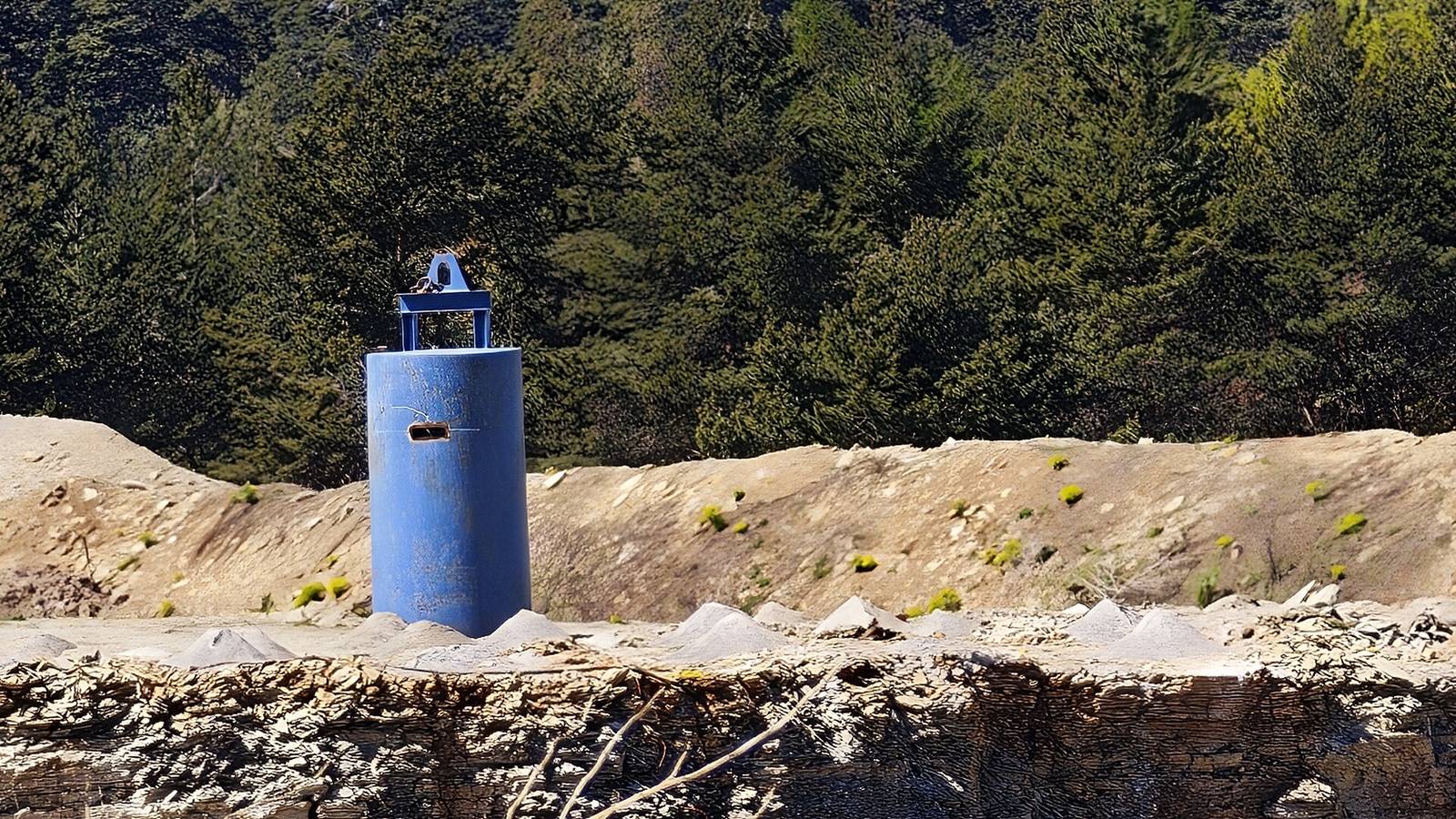
Definition
Stemming
Stemming is the inert material, usually drill cuttings or crushed stone, packed into the collar of a charged blasthole above the explosive to keep the gases confined in the rock for as long as possible.
Contents 5 sections
Stemming length is commonly set at about 0.7 times the burden, within a range of 0.5 to 1.0 times, and the best fill is angular crushed rock. Too little, or the wrong material, and the explosive gases escape through the collar instead of breaking rock.
What stemming does in the hole
When a charge fires, the strain wave cracks the rock first and the gas pressure then pushes those cracks open. Hacettepe University’s course notes warn that “a premature escape of these due to insufficient stemming” lowers the performance of the explosive energy (Hacettepe University, MAD455 notes, read 25 Sep 2026).
Researchers at Tarkwa’s University of Mines and Technology list the usual fill in a 2019 blast design study: drilling debris, sand, chippings and plant tailings. It explains that coarse angular crushed rock locks together to confine the gas for longer, that short stemming can reduce fragmentation and loosening, and that the right length increases as the rock gets weaker. It also reports that short columns cause “airblast, cut-offs and overbreak problems” (Agyei and Owusu-Tweneboah 2019, read 25 Sep 2026).
Stemming length and material size
Stemming length T (m) = 0.5 to 1.0 × burden B (m), typically 0.7 × B
Explosive column (m) = hole depth - stemming - backfill - decking
Stemming particle size (mm) ≈ 0.05 × hole diameter (mm)
The length rule and the column formula come from the US Office of Surface Mining’s blast design sheet (OSMRE, Blast Design Rules of Thumb, read 25 Sep 2026). The Tarkwa paper cites Konya and Walter for the same 0.7 figure and gives the particle size guide. OSMRE’s training module on blast effects sets 0.7 times the burden as a minimum for airblast control and asks for “an angular, crushed-rock product of the correct size distribution appropriate for the hole diameter” (OSMRE Module 8, read 25 Sep 2026).
Because the length is set from the burden, a change to the burden should bring a change to the stemming. How the charge column turns into kilograms per bank cubic metre is set out in powder factor and fragmentation.
Where it goes wrong
OSMRE’s module names poor stemming among the causes of both airblast and flyrock. It notes that material of the wrong size and angularity grips the hole wall weakly, and that stems which are too short “will most likely be ejected”. Stemming thrown from the collar is called rifling. The same module advises stemming through incompetent zones such as mud seams, and the US blast records it describes must include the type and length of stemming.
On South African mines, regulation 4.14(3) of the explosives regulations requires that the material used for stemming and tamping complies with SANS 120:2009, “Stemming for use in blasting” (GN R. 953, Government Gazette 41904, 14 Sep 2018, read 25 Sep 2026). Chapter 4 may have been amended since; confirm the regulation against the latest consolidated version.
Common questions
What is the best material for stemming?
Angular crushed rock, because the pieces lock together and resist being blown out. A common guide is an average particle size of about 0.05 times the hole diameter. OSMRE’s training material advises crushed stone. On South African mines, regulation 4.14(3) refers stemming material to SANS 120:2009.
What happens if stemming is too short?
The gases vent through the collar before they have finished breaking the rock. The result is airblast, flyrock and coarser fragmentation, and the stemming itself can be thrown out of the hole.
Can a hole have too much stemming?
Yes, in the sense that every extra metre of stemming is a metre less of explosive column, so the upper part of the bench gets less energy. OSMRE’s rule of thumb tops out at 1.0 times the burden.
Sources
- Agyei, G. and Owusu-Tweneboah, M., A Comparative Analysis of Rock Fragmentation using Blast Prediction Results, Ghana Mining Journal 19(1), 2019, pp. 49-58. Read 25 Sep 2026.
- US Office of Surface Mining Reclamation and Enforcement, Blast Design Rules of Thumb - Coal. Read 25 Sep 2026.
- US Office of Surface Mining Reclamation and Enforcement, Blaster training Module 8: Controlling the Adverse Effects of Blasting. Read 25 Sep 2026.
- Department of Mineral Resources, Mine Health and Safety Act, 1996: Regulations relating to explosives, GN R. 953, Government Gazette 41904, 14 Sep 2018. Read 25 Sep 2026.
- Hacettepe University, MAD455 Surface Mining course notes. Read 25 Sep 2026.