Fuel & diesel Glossary Global
Wet stock: counting the diesel you actually hold
Wet stock is the fuel physically in your tanks and bowsers, measured by dip. Compare it with book stock each period; the gap is your stock variance.
Definition
Wet stock (fuel)
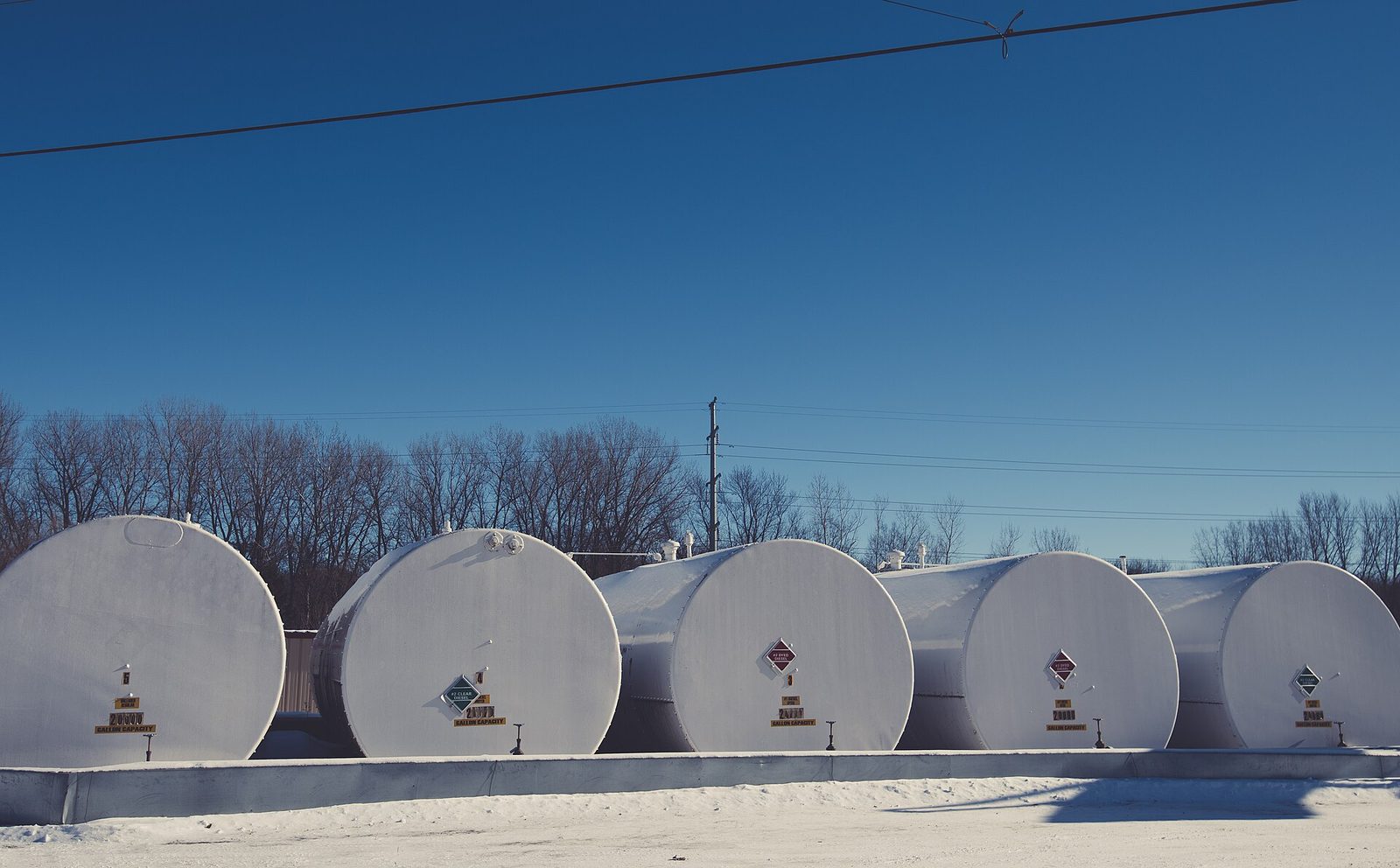
Wet stock is the fuel physically held on site in tanks, bowsers and other containers, measured by dip and checked against the book stock that deliveries and metered issues say should be there.
Contents 6 sections
The word “wet” separates litres you can dip from litres that exist only in a ledger. Every storage point on a mine site, whether the main tank, a satellite tank or a bowser, has two stock figures at any moment: the one you measure and the one you calculate.
What wet stock means on site
Wet stock is only known when somebody dips the tank and converts the reading to litres with that tank’s calibration chart. Between dips, the site works on book stock, and each dip tests it.
South African diesel refund rules make the storage record part of the claim. Schedule 6 asks for storage logbooks that “reflect details of distillate fuel purchases, source thereof, how dispersed/disposed and purpose of disposal”. It also asks for records of “the capacity of each tank in which fuel is stored and the receipt and removal from such tanks” (SARS, Schedule 6 Part 3 Note 6, read 25 Sep 2026). A wet stock count that ties back to those records shows where the diesel went.
Wet stock covers the storage points in the chain that the guide to where diesel goes missing on a mine site follows from delivery to machine.
Wet stock variance formula
Book stock (litres) = previous dip + receipts - metered issues
Variance (litres) = wet stock by dip - book stock
Variance (% of throughput) = variance ÷ metered issues × 100
Expressing the variance as a share of throughput lets you compare a busy tank with a quiet one, and this month with last.
What moves the number without a loss
Three things move the variance with no litre lost.
- Meter error. OIML R 117 places fuel dispensers in accuracy class 0.5, which allows a complete measuring system a maximum permissible error of 0.5 per cent either way (OIML R 117-1:2019, Tables 2 and 3).
- Temperature. Diesel expands and contracts. Read from the charts in a PTB study (Germany’s metrology institute), fossil diesel at 15 °C grows by about 0.082% of its volume for each degree in summer grade and 0.086% in winter grade; the paper’s text confirms the 4 per cent gap between the grades (Wolf and Heinsch, IMEKO 2012).
- Records. A study of one South African operation’s diesel logbooks found 151 errors in a month. After correction, the remaining tank and bowser differences were all within one per cent, and the authors allocated them “as general losses to the system” (Ngwaku et al., SAJIE 32(3), 2021).
Fuel losses and the diesel refund
Some shortfalls turn out to be real losses. Schedule 6 deals with those directly. It states: “Distillate fuel lost through accident, theft, leakage or any other cause whatsoever is regarded as non-eligible.” The record must give the date, the place and circumstances, and “the quantity of fuel lost and how the quantity was calculated” (Note 6(r)). The wet stock reconciliation is that calculation, so keep the dip sheets and calibration charts with it. For the refund rules as a whole, see the diesel refund from 1 April 2026.
Common questions
What is the difference between wet stock and book stock?
Wet stock is what the dip says is in the tank. Book stock is what the paperwork says should be there: the last count, plus deliveries, less metered issues. The difference between the two is the stock variance.
How big a wet stock variance is acceptable?
We have not found a published benchmark in a primary source. Work out what your own meters and temperature swings can explain. A class 0.5 meter system may be out by 0.5 per cent, and each degree Celsius of temperature change moves diesel volume by roughly 0.08% (0.082% summer grade, 0.086% winter grade).
Can I claim the diesel refund on litres missing from wet stock?
No. Schedule 6 treats fuel lost through theft, leakage or any other cause as non-eligible, and the lost quantity must be shown as a non-eligible purchase, with how the quantity was calculated.
Sources
- Schedule No. 6 to the Customs and Excise Act, Part 3 Note 6. South African Revenue Service, consolidated to 11 September 2026. Read 25 Sep 2026.
- OIML R 117-1:2019, Dynamic measuring systems for liquids other than water. International Organization of Legal Metrology. Read 25 Sep 2026.
- Wolf and Heinsch, Density measurements of liquid fuels to determine temperature conversion factors for legal metrology. PTB, IMEKO XX World Congress, 2012. Read 25 Sep 2026.
- Ngwaku, Pascoe, Vosloo and van Laar, Steps to improve logbook compliance for diesel rebates. South African Journal of Industrial Engineering 32(3), 2021. Read 25 Sep 2026.