Fuel & diesel Guide
Fuel theft on mine sites: where diesel goes missing
Fuel theft is one of several ways diesel leaves a mine site's record, at six points from delivery to machine. How to find each loss and reconcile a month.
Contents 12 sections
Diesel goes missing on a mine site at six points: the delivery, the storage tank, the bowser, the dispensing nozzle, the machine and the records that are meant to account for it. You find it by reconciling each stage separately every month, and by treating any gap bigger than the known measurement tolerances as a loss to investigate.
Theft is one cause among several. Short deliveries, leaks, meter error, temperature and missing fuel log entries all show up the same way at month-end: fewer litres in the record than were paid for.
What missing diesel costs
The first cost is the diesel itself. At the September 2026 wholesale price of 2,911.11 cents a litre in Gauteng (diesel price for September 2026), 1,000 missing litres is R29,111.10 at list price. A 2021 paper in the South African Journal of Industrial Engineering puts diesel at “up to 46 per cent of mining operations costs” (Ngwaku et al., SAJIE 32(3)).
The second cost is the refund. For a site that claims it, Schedule 6 says: “Distillate fuel lost through accident, theft, leakage or any other cause whatsoever is regarded as non-eligible” (SARS, Schedule 6 Part 3 Note 6(r), read 25 Sep 2026). The lost litres must be shown as non-eligible, with a record of “the quantity of fuel lost and how the quantity was calculated”. Diesel that disappears without any record leaves the claim resting on a logbook that does not balance. The rules are set out in the diesel refund from 1 April 2026.
1. At delivery
Diesel can go missing before it reaches your tank. Common causes:
- a short delivery, where the delivery note shows more than was offloaded
- a tanker compartment not fully emptied
- diesel drawn from the tanker on the way to site. In 2020 police in KwaZulu-Natal arrested 15 people “while trying to pump diesel from the trucks”, two of them police officers (SAnews)
- temperature. Diesel expands as it warms. PTB, Germany’s national metrology institute, measured the thermal expansion coefficient of fossil diesel at 15 °C at about 0.082 per cent per degree Celsius for summer quality and 0.086 per cent for winter quality. Those values are read from the paper’s charts; its text gives the gap between the two grades as 4 per cent (Wolf and Heinsch, IMEKO 2012). A load that cools after delivery occupies less of the tank. Ask your supplier whether the volume on the delivery note is at the loading temperature or corrected to a reference temperature.
What to check: dip the tank before and after every delivery, and record both dips against the delivery note number. Check seals and compartment dips before offloading. Schedule 6 also requires purchase documents “in the name of the user”, recording the invoice number, quantity, seller and date of receipt (Note 6(q)).
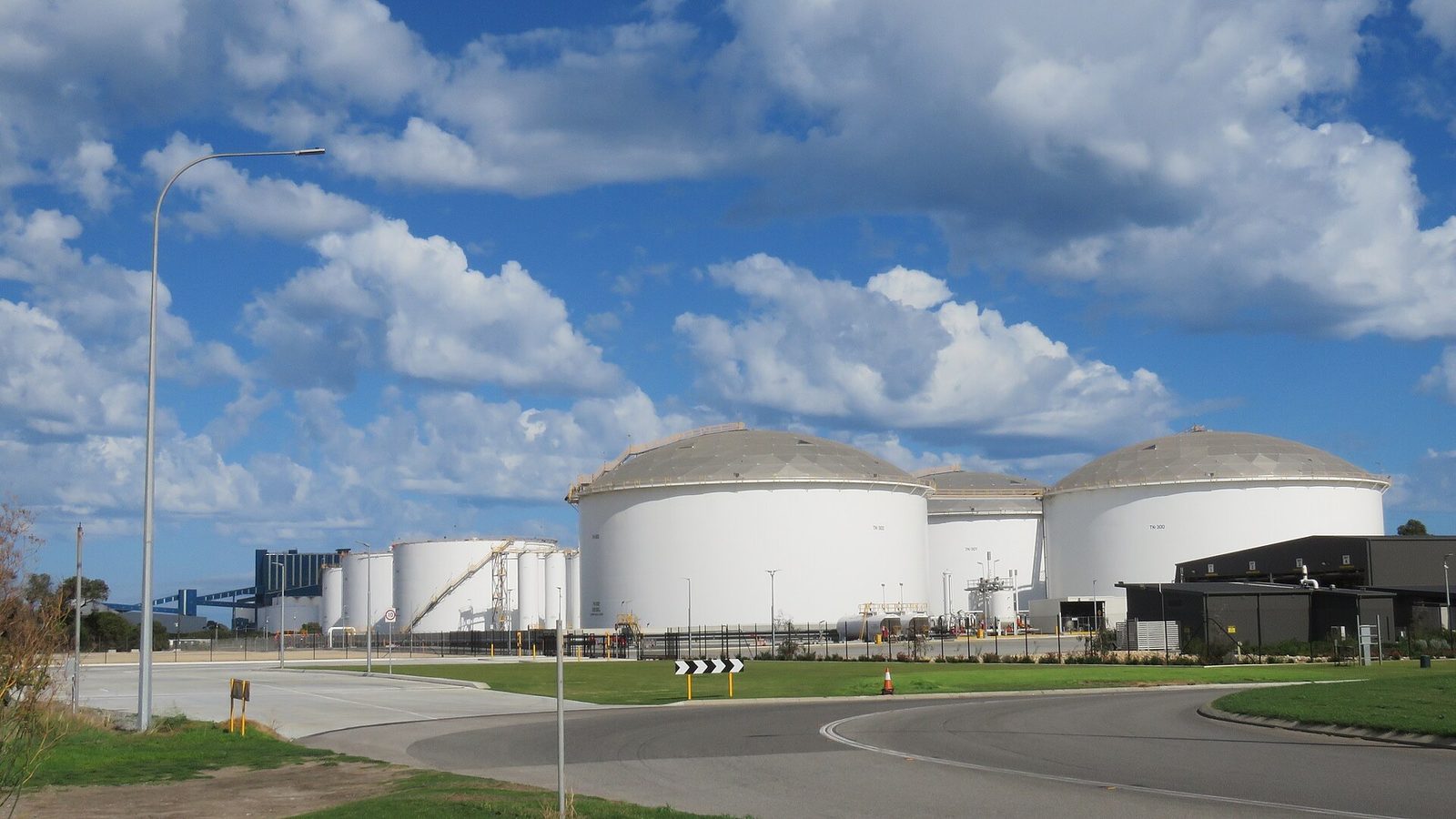
2. In the storage tank
Once the diesel is in the tank, the stock record is the book figure: opening stock plus receipts less issues. The dip is the check on it.
Where litres go:
- leaks from the tank, valves and pipework
- water and sludge. Water that settles at the bottom of the tank is counted as diesel by a dip that does not check for it.
- a wrong calibration chart. A dip reading turned into litres with the wrong chart gives a wrong stock figure every time.
- draws that bypass the meter, from a drain valve or a second outlet
- theft from the tank at night or over weekends
Schedule 6 expects the site to record “the capacity of each tank in which fuel is stored and the receipt and removal from such tanks” (Note 6(q)(v)(bb)(D)). Keep the calibration chart for each tank on file with the date it was made.
3. At the bowser
A bowser adds a second tank and a second meter to the chain. The diesel leaves the main tank through one meter and reaches the machine through another, and each transfer is a chance to lose litres or lose the record of them.
The 2021 SAJIE case study shows how large a bowser gap can get. Before handwritten fill sheets were merged into the new electronic record, one bowser’s meter showed 363,551 litres issued against 205,757 litres recorded to vehicles. The researchers traced the gap to operators “in the early stages of adapting to the new system”. Once the paper records were added, every tank and bowser balanced to within one per cent.
Reconcile the bowser as its own stock point, with its own opening and closing dips, receipts from the main tank and issues by its meter.
4. At the nozzle
Every fill is a meter reading and a log entry. Either can be wrong.
- Meter error. OIML R 117, the international recommendation for fuel measuring systems, puts fuel dispensers and road tanker meters in accuracy class 0.5. The maximum permissible error for a complete measuring system in that class is 0.5 per cent, and 0.3 per cent for a meter tested on its own at type evaluation (OIML R 117-1:2019, Tables 2 and 3). A site meter that has not been checked against a calibrated measure for years may be further out.
- Fills not written down, or written down twice.
- Fills booked to the wrong machine. In the SAJIE case study, 13 of 151 errors in one month were “the selection of the incorrect location and vehicle registration”.
- Spills and overfills at the nozzle.
- Diesel issued into containers, light vehicles or equipment that is not on the asset list.
SARS’s calculation policy asks for “a detailed logbook that contains records of all diesel purchases, storage and usage records and dates of vehicles filled with diesel as well as which qualifying activity was conducted per vehicle filled” (SE-DSL-02). Record the meter reading before and after each fill, the machine number, its engine hours and the operator.
5. In the machine
Diesel that reaches the machine can still leave it without doing work:
- drawn from the machine’s tank on site or after hours
- leaks from fuel lines, filters and injectors
- engines left idling. Our guide to idle time in mining fleets covers how to measure it.
- consumption above what the work needs, from a fault or from how the machine is operated
The check here is litres per engine hour for each machine, compared with its own history on similar work. A machine whose consumption rises with no change in its work has a reason that can be found. Schedule 6 already asks for “intensity of use (e.g. distance, duration, route, speed, rate)” as support for logbook entries (Note 6(a)(xi)). Where machines report fuel used through telematics, compare that with the litres dispensed to the same machine.
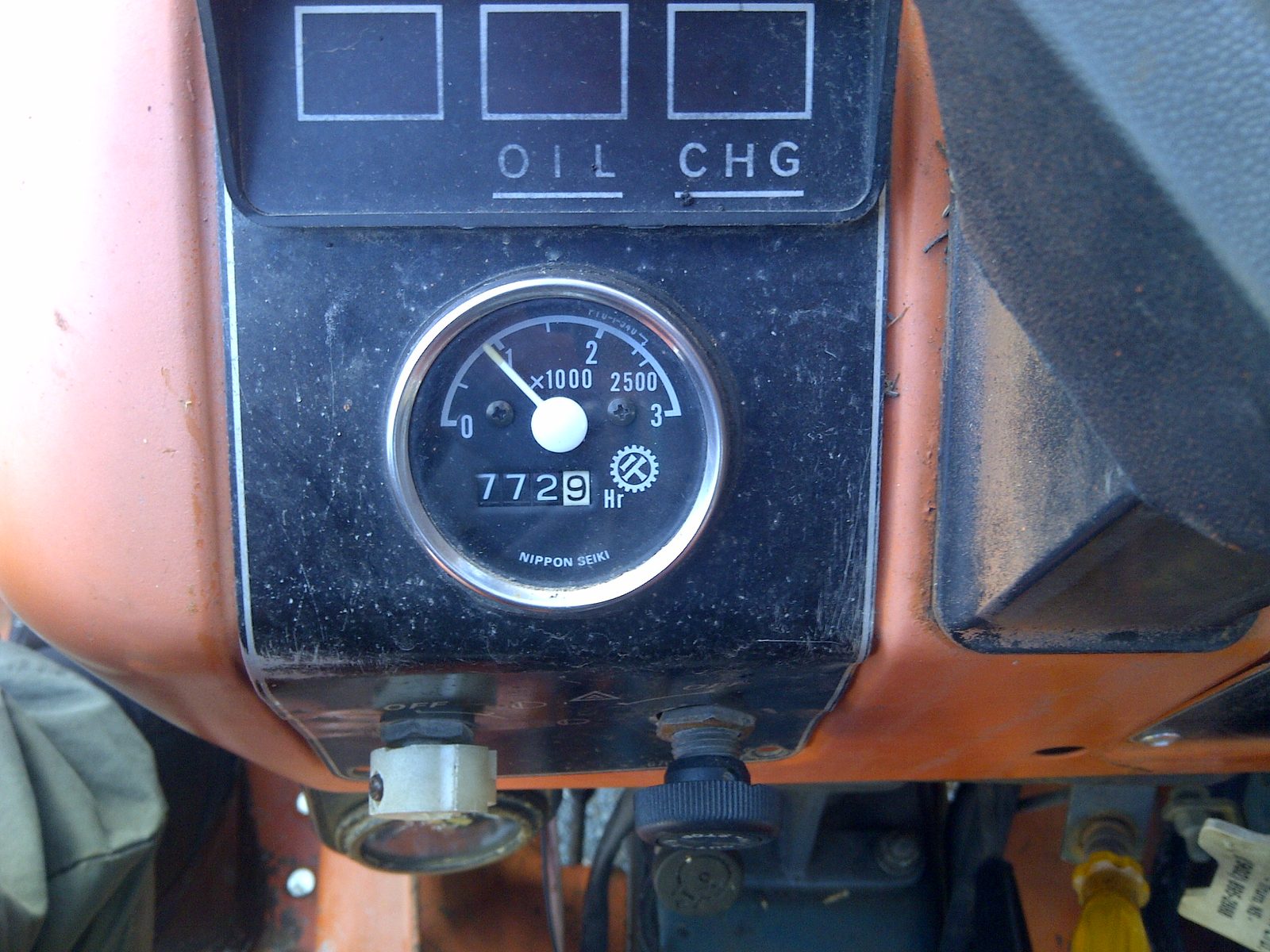
Engine hours need the same care as litres. In the SAJIE study, 86 of the 151 errors were in engine hours. For which hour reading to use, see engine hours, SMR and hour meters.
6. In the records
A records error creates a gap in the same way a physical loss does. A delivery captured twice, a fill logged to the wrong machine or a meter reading typed with a digit missing all create a gap that looks like theft. The SAJIE study found 151 errors in one month’s diesel records on one operation, and the balance closed only after the errors were corrected and the paper sheets merged in.
Correct the records before you call a gap a loss. Then treat what is left as a real loss, find its cause and record it the way Schedule 6 asks: date, place, circumstances, quantity and how the quantity was calculated. Where the cause is theft, a police report supports the record (Note 6(r)(iv)).
Reconciling diesel stock for a month
Book closing stock (litres) = opening dip + receipts - metered issues
Stock variance (litres) = closing dip - book closing stock
Issue variance (litres) = litres on the fuel log - metered issues
A negative variance means fewer litres than the record says. Run the calculation for each tank and each bowser, then for each machine.
Correct the records first, because the two issue variances (890 litres here) are most likely paperwork. Then compare what is left against the tolerances. A variance that stays after both steps is a loss, and the next step is to find where on the chain it happened.
What counts as normal diesel loss
We found no published industry benchmark for diesel loss on South African mine sites that we could trace to a primary source. Figures on vendor websites are not sourced. Set your own threshold from tolerances you can measure.
- your meters’ accuracy, checked against a calibrated measure, with OIML R 117’s 0.5 per cent for a class 0.5 system as the reference
- the temperature difference between delivery and dip, at about 0.08 per cent of volume per degree
- how precisely your dip and calibration chart convert a reading into litres
A gap inside those limits month after month is measurement. A gap outside them, or one that is always negative, needs an explanation.
Diesel loss checklist
File each month’s reconciliation with the fuel log and delivery notes for the same period. Schedule 6 asks for a trail “from purchase to use”, and a reconciliation kept with its source records shows that trail for every tank, bowser and machine. For the wider argument for tying fuel issues to machines, jobs and production as they happen, see the case against reconstructing fuel records at month-end.
Common questions
How much diesel loss is normal on a mine site?
There is no published industry figure we could verify. Work from your own measurement tolerances instead: a fuel meter in accuracy class 0.5 may read up to 0.5 per cent out, and diesel changes volume by about 0.08 per cent per degree Celsius. A gap larger than those can explain is a loss to investigate.
Can you claim the diesel refund on stolen diesel?
No. Schedule 6 treats diesel lost through accident, theft, leakage or any other cause as non-eligible. The quantity must be shown as a non-eligible purchase with the date, place, circumstances and how it was calculated.
How often should diesel be reconciled on site?
At least monthly for each tank and bowser, and always before the VAT return on which the diesel refund is claimed. Where throughput is high or a problem is suspected, reconcile the bowser daily or per shift.
Sources
- Schedule No. 6 to the Customs and Excise Act, Part 3 Note 6, consolidated, dated 11 September 2026, SARS.
- SE-DSL-02 Manage Diesel Refund Calculation, external policy, SARS, effective 20 April 2026.
- OIML R 117-1:2019 Dynamic measuring systems for liquids other than water, Part 1, International Organization of Legal Metrology.
- Density measurements of liquid fuels to determine temperature conversion factors for legal metrology, H. Wolf and S. Heinsch, PTB, XX IMEKO World Congress, 2012.
- Steps to improve logbook compliance for diesel rebates: a process-driven approach, S.R. Ngwaku, J. Pascoe, J.C. Vosloo and J.H. van Laar, South African Journal of Industrial Engineering 32(3), 2021.
- 15 suspects arrested for diesel theft, SAnews, 2 March 2020.