Fuel & diesel Regulation United States
Off-highway diesel tax credit for US mining
Undyed diesel burned off-highway on a mine earns back $0.243 a gallon of federal excise tax on Form 4136 or Form 8849. What qualifies and how to claim.
Contents 10 sections
The federal excise tax on undyed diesel is $0.244 a gallon, and a business that burns taxed diesel in an off-highway business use, such as earthmovers, off-highway haul trucks or a site generator, can claim back $0.243 a gallon on Form 4136, or as a refund on Schedule 1 of Form 8849 once the claim reaches $750. Dyed diesel bought for off-road use carries only the $0.001 LUST tax, so there is nothing to claim on it.
IRS Publication 510 (revised December 2025) is the primary source here, read with the 2025 Form 4136 and Schedule 1 of Form 8849. Rates are federal only; states have their own fuel taxes and refund rules, which this piece does not cover.
The tax and the rate you claim back
Publication 510 states: “The tax on diesel fuel and kerosene is $0.244 per gallon. It’s imposed on the removal, entry, or sale of diesel fuel and kerosene.” That $0.244 is 24.3 cents of excise tax plus 0.1 cents of Leaking Underground Storage Tank (LUST) tax, as EIA breaks it down (EIA FAQ, read 25 Sep 2026).
The tax is paid upstream and built into the pump or delivery price. The rule that gets it back reads: “A credit or refund is allowable for the tax on undyed diesel fuel or undyed kerosene used for a nontaxable use.” Off-highway business use is one of those nontaxable uses.
The claim rate on Form 4136, line 3a, is $.243 a gallon, credit reference number (CRN) 360. The missing tenth of a cent is the LUST tax; Publication 510 notes that “the LUST tax is generally not refunded.”
Dyed diesel: the simpler route
A site can avoid the claim altogether by buying dyed diesel for off-road plant. Publication 510: “Only the $0.001 LUST tax applies to dyed diesel fuel and dyed kerosene.” EIA adds that off-road diesel “is not subject to the state and federal excise taxes applied to the retail sale of diesel fuel used in vehicles operated on public roadways” and “is dyed red” (EIA FAQ).
The catch is misuse. A penalty applies where dyed fuel “is held for use or used by the person for a use other than a nontaxable use and the person knew, or had reason to know, that the fuel was dyed.” It is “the greater of $1,000 or $10 per gallon”, rising after the first violation, and officers, employees or agents who wilfully took part are jointly liable. Red diesel in a registered highway truck is the obvious example of a taxable use.
The credit therefore matters where a site uses undyed diesel off-highway: a single bulk tank feeding both registered trucks and yellow plant, fuel bought at retail stations for plant, or a contract that only supplies clear diesel.
What “off-highway business use” means
Publication 510 defines it:
“Off-highway business use means fuel used in a trade or business or in an income-producing activity other than as a fuel in a highway vehicle registered or required to be registered for use on public highways.”
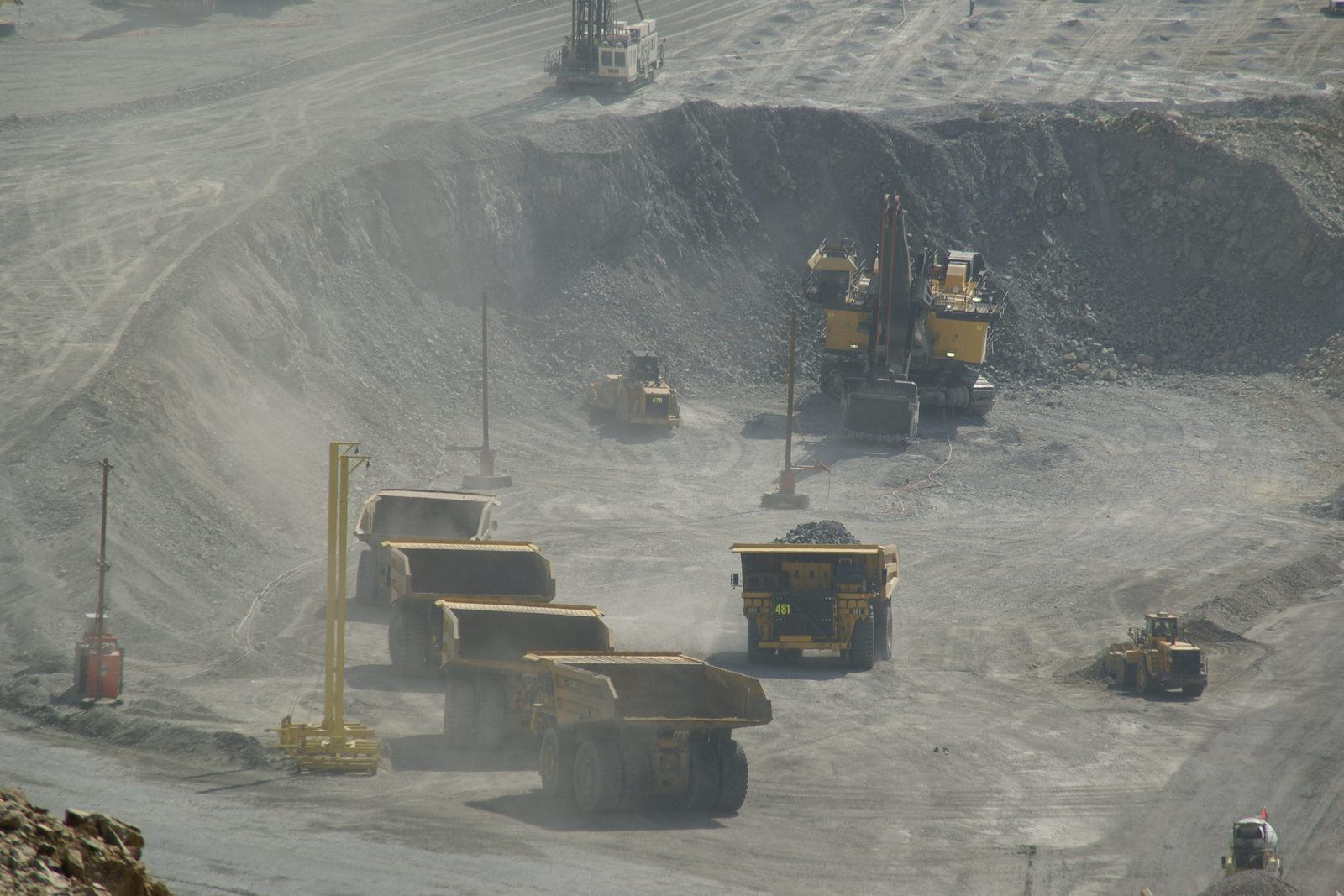
It “includes fuels used in any of the following ways. In stationary machines such as generators, compressors, power saws, and similar equipment. For cleaning purposes. In forklift trucks, bulldozers, and earthmovers.”
A highway vehicle is “any self-propelled vehicle designed to carry a load over public highways”. A public highway “includes any road in the United States that isn’t a private roadway”, so internal haul roads on mine property are generally outside it.
Two exceptions matter on a mine:
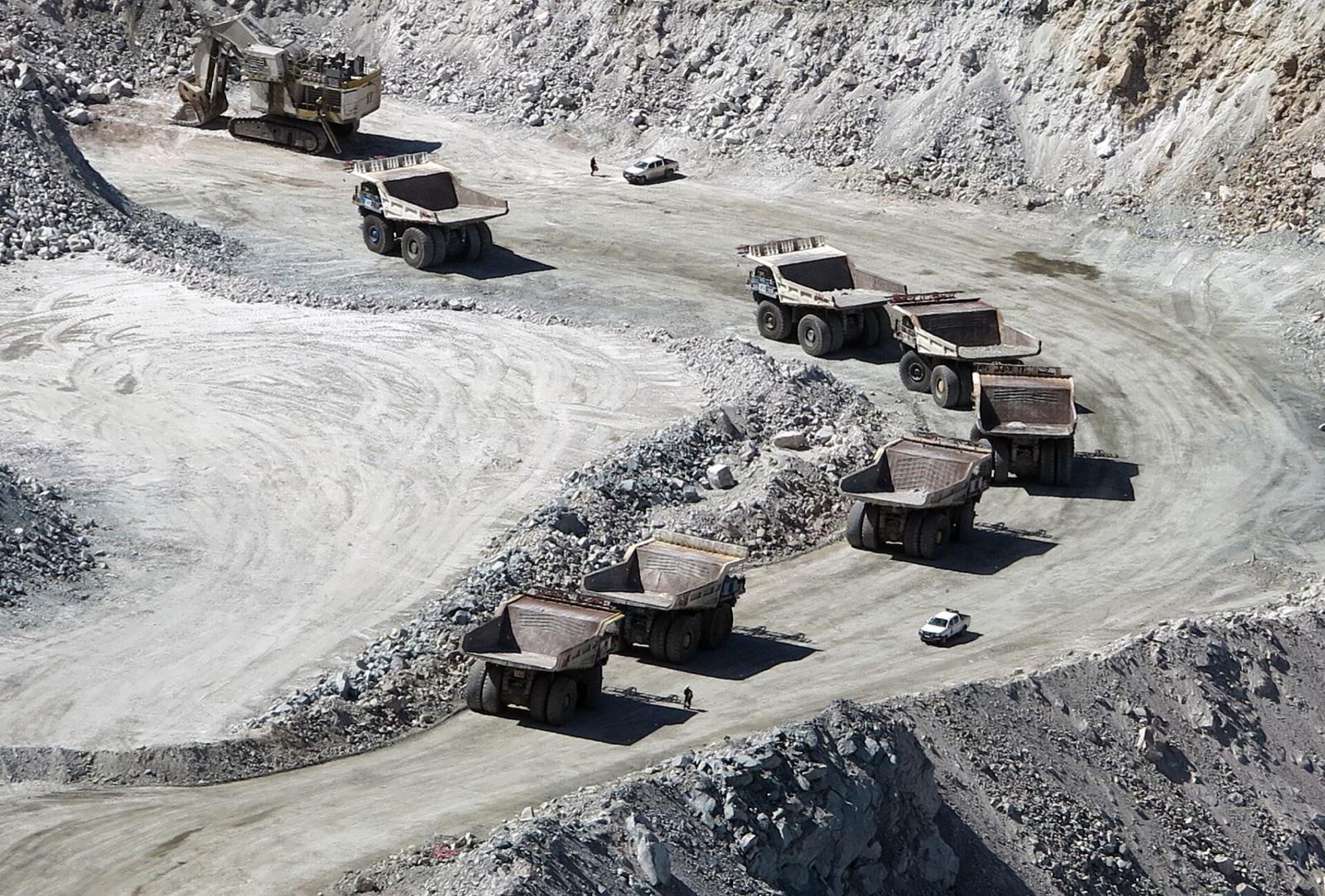
- Vehicles specially designed for off-highway transportation. Not a highway vehicle if designed to carry “a particular type of load other than over the public highway” and its capability to carry a load on a public highway “is substantially limited or impaired”. The IRS looks at size, licensing, and “whether the vehicle can transport a load at a sustained speed of at least 25 miles per hour” [40 km/h]. Rigid off-highway haul trucks generally fall here.
- Specially designed mobile machinery. Machinery permanently mounted on a special chassis for operations including “drilling, mining” qualifies only if “The vehicle must have traveled less than 7,500 miles on public highways during the taxable year” [about 12,070 km].
What qualifies on a mine site
| Use on site | Claim on undyed diesel? | Basis in Publication 510 |
|---|---|---|
| Excavators, dozers, wheel loaders, graders | Yes | “bulldozers, and earthmovers” |
| Rigid off-highway haul trucks and articulated trucks not registered for highway use | Generally yes | vehicles specially designed for off-highway transportation |
| Generators, compressors, lighting towers, pumps | Yes | “stationary machines” |
| Fuel used for cleaning parts | Yes | “For cleaning purposes” |
| Truck-mounted drill on a special chassis | Yes if under 7,500 miles [12,070 km] on public highways in the year; Form 4136 only | mobile machinery |
| Separate engine on a service truck (compressor, pump) drawing from the truck’s tank | Yes, the separate engine’s share, reasonably estimated | “Use in separate motor” |
| Registered fuel, lube or water truck, propulsion engine (including power take-off work) | No | “Dual use of propulsion motor” |
| Registered pickups and personnel vehicles | No | highway vehicle registered for use on public highways |
| Spilt, stolen or burnt fuel | No | “You can’t treat fuel lost or destroyed through spillage, fire, or other casualty as fuel used in an off-highway business use.” |
Only the ultimate purchaser can claim (“The ultimate purchaser of the diesel fuel is the only person eligible to make this claim”, Form 4136 instructions). Where a mine supplies fuel to a contractor, the contract should say who bought it and so who claims.
Which form: 4136, 8849 or 720
- Form 4136 attaches to your income tax return and claims the credit for the year. It is the only route for amounts under $750 for the year and for fuel “used in mobile machinery (off-highway business use) that traveled less than 7,500 miles on public highways”. The 2025 form adds Part I, information about your business, which you must complete “To determine if you’re qualified to claim any fuel tax credit”, and a column (d) for “the actual fuel cost from your records” (Form 4136 instructions).
- Schedule 1 (Form 8849) gives a refund during the year. “The amount claimed on Schedule 1 must be at least $750”, met by one quarter or by adding quarters not already claimed; the claim “must be filed during the first quarter following the last quarter included in the claim”; and “Only one claim may be filed for a quarter” (Schedule 1 instructions).
- Form 720, Schedule C suits businesses that already file quarterly excise returns.
“Only one credit may be taken for each amount of any fuel type”: gallons claimed on Form 8849 cannot go on Form 4136 as well.
Worked example
Had the 38,500 gallons been dyed diesel, the $9,355.50 would never have been paid, along with any state excise the delivery carried. The claim recovers federal tax only.
Records to keep
Publication 510 says to keep “at your principal place of business all records needed to enable the IRS to verify that you’re the person entitled to claim a credit or refund and the amount you claimed”. For an ultimate purchaser that means:
- “The number of gallons purchased and used during the period covered by your claim.”
- “The dates of the purchases.”
- “The names and addresses of suppliers and amounts purchased from each in the period covered by your claim.”
- “The nontaxable use for which you used the fuel.”
- “The number of gallons used for each nontaxable use.”
On a mine site that points to delivery tickets in the claimant’s name, a dispensing log by machine (unit number, date, gallons), a list showing which units are registered for highway use, a log of spills and losses, and the fuel cost records behind Form 4136 column (d). The IRS “may ask you later for proof, such as receipts of the actual costs you paid for each fuel type”. Keeping that log with the machine and work records is the argument in this piece on fuel data as a site control signal.
The credit is taxable income
If you deducted the full cost of the fuel, tax included, Publication 510 says to “Include any credit or refund of excise taxes on fuels in your gross income”. On the cash method, a refund counts in the year received and a Form 4136 credit in the year you file it; on an accrual method, in the year the fuel was used. A missed claim can often go on an amended return, generally within “3 years from the date you filed your original return or within 2 years from the date you paid the income tax”, whichever is later.
For what diesel costs this month, see the US diesel price for September 2026.
Common questions
How much is the off-highway diesel tax credit per gallon?
$0.243 a gallon of undyed diesel used in an off-highway business use (Form 4136 and Schedule 1 of Form 8849, line 3a). The federal tax is $0.244; the $0.001 LUST tax is not refunded.
Can I claim the credit on dyed diesel?
No. Dyed diesel for a nontaxable use carries only the $0.001 per gallon LUST tax, so there is no federal excise tax to claim back. The credit is for undyed, taxed diesel that ended up in an off-highway use.
Do off-highway haul trucks and excavators qualify?
Generally yes. IRS Publication 510 lists bulldozers and earthmovers as off-highway business use and says vehicles specially designed for off-highway transport, with limited ability to carry a load on a public highway, are not highway vehicles. Fuel in registered highway trucks and pickups does not qualify.
Should I use Form 4136 or Form 8849?
Form 4136 claims the credit once a year with your income tax return. Schedule 1 of Form 8849 gives a refund during the year once the claim reaches $750, filed in the quarter after the last quarter claimed. Fuel in mobile machinery can only be claimed on Form 4136.
Sources
- Publication 510 (12/2025), Excise Taxes, IRS.
- Form 4136 (2025), Credit for Federal Tax Paid on Fuels, IRS.
- Instructions for Form 4136 and Schedule A (2025), IRS.
- Schedule 1 (Form 8849), Nontaxable Use of Fuels, with instructions, IRS.
- Does EIA publish off-road diesel fuel prices?, EIA.
- How much tax do we pay on a gallon of gasoline and on a gallon of diesel fuel?, EIA.
- NIST Guide to the SI, Appendix B.9, NIST (conversion factors).