Load, haul & blast Glossary Global
Burden in blasting: the distance to the free face
Burden is the distance from a row of blastholes to the free face, or between rows. Rules of thumb set it at 24 to 39 hole diameters. Methods compared.
Definition
Burden (blasting)
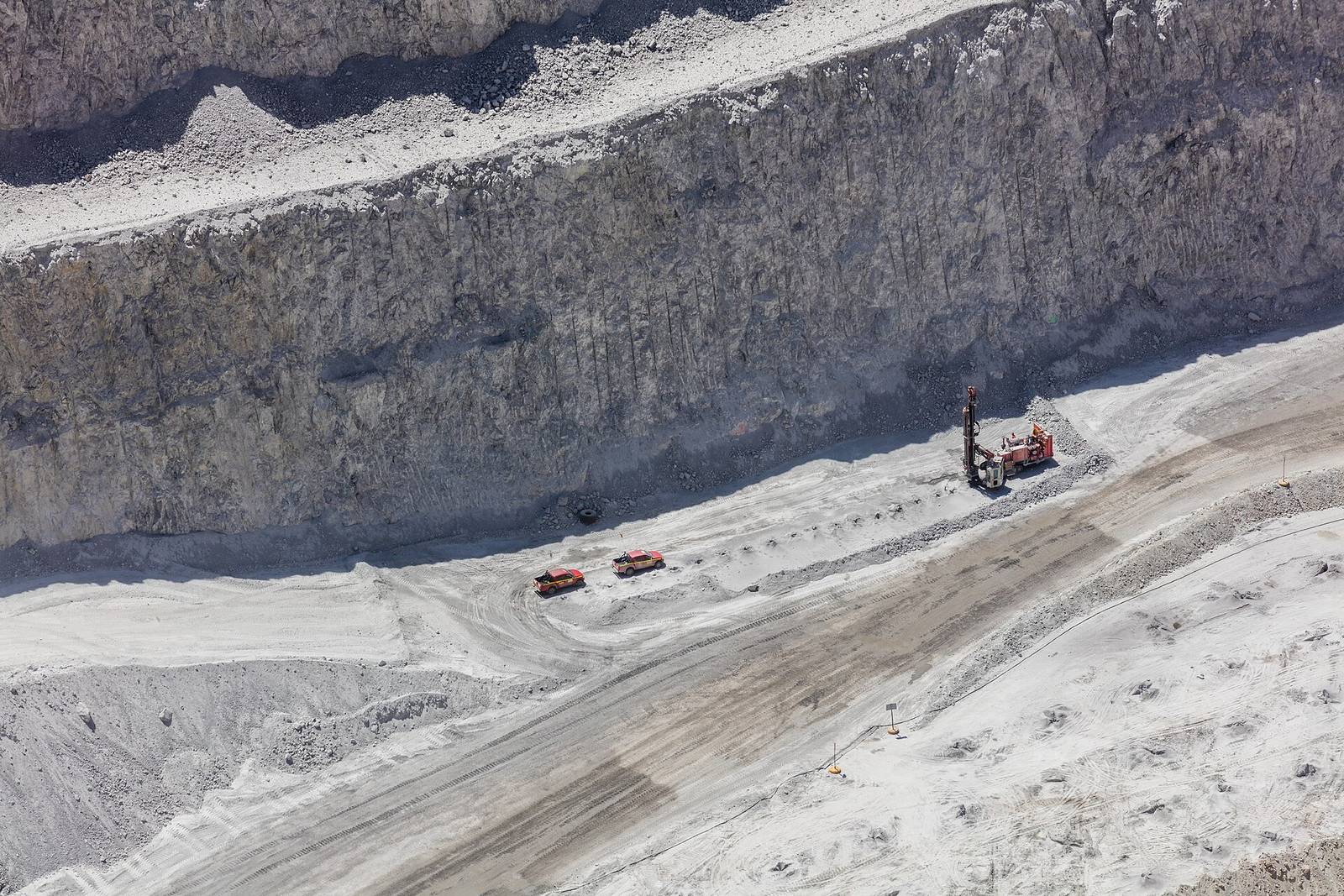
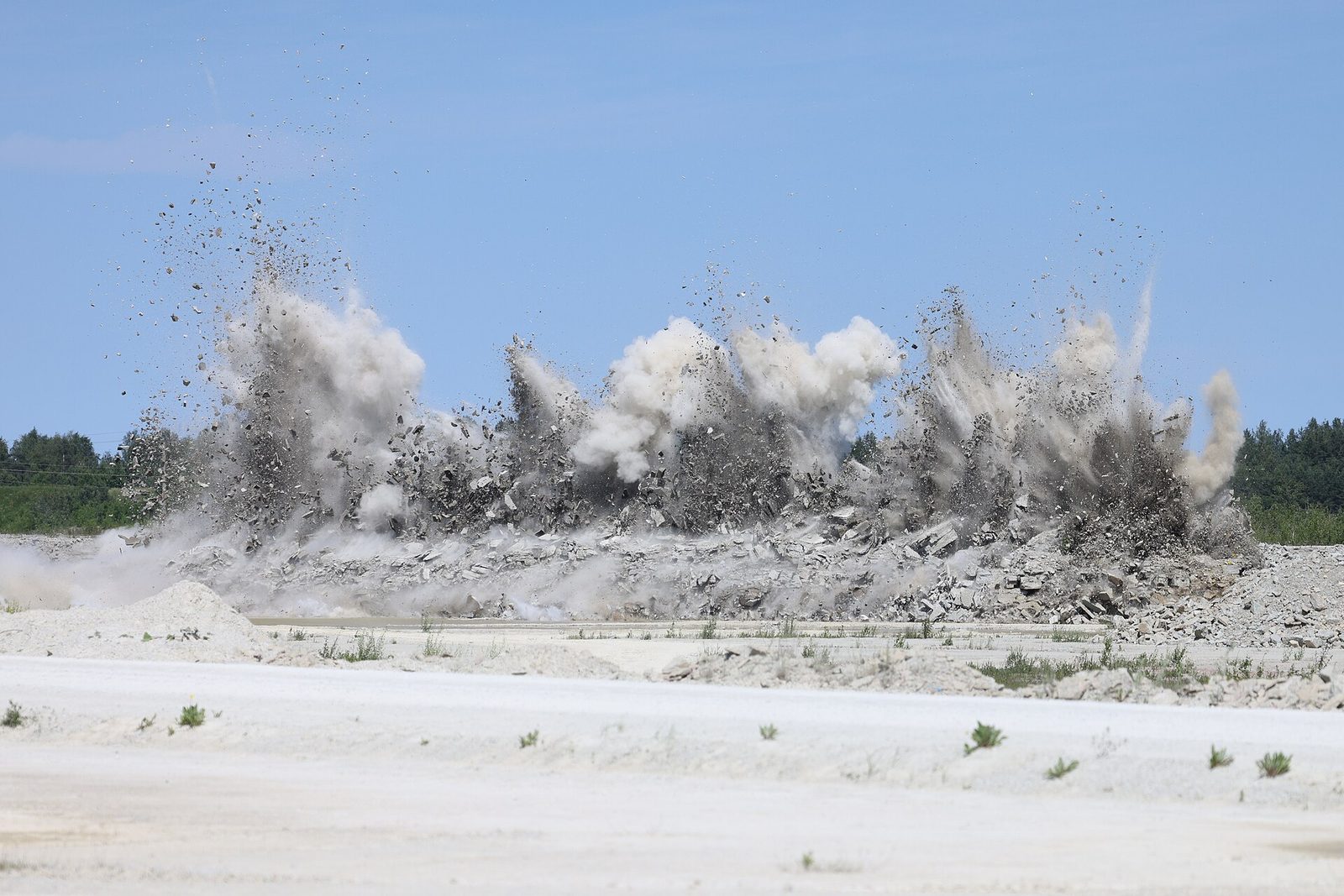
In blasting, the burden is the distance from a blasthole, or a row of blastholes, to the nearest free face the rock can move towards, measured at right angles to the row; in a multi-row pattern it is also the distance between rows.
Contents 5 sections
Burden is sized from the hole diameter: the published rules give between about 24 and 39 hole diameters. Spacing, stemming and subdrill are then set as multiples of it. Agyei and Owusu-Tweneboah of Tarkwa’s mining university call it “the most important and critical value in the design of a surface blast” (Agyei and Owusu-Tweneboah 2019, read 25 Sep 2026).
Drilled burden and effective burden
Two meanings need separating. The drilled burden is the figure on the drill plan: the distance from a row of holes to the free face, or from one row to the next. The short, or effective, burden is the distance from a hole to the free face that exists at the moment it fires. In a multi-row shot the first holes to fire open new faces for those behind. The effective burden therefore depends on the delay pattern too.
When the burden is too small or too large
The Tarkwa authors set out both failures:
| Burden | What the paper reports |
|---|---|
| Below the optimum | Excessive forward throw, high airblast, excessively fine fragmentation |
| Above the optimum | Inadequate fragmentation, possible upward throw causing flyrock, over-confined holes and high ground vibration per kilogram of explosive |
The US Office of Surface Mining’s blaster training adds the front row. Among the causes of flyrock it lists “insufficient front-row burden, causing front-face blowouts”, and among the causes of airblast, gas escaping along the highwall face. Its first control for flyrock is to “accurately measure the burden for each blast hole, and be aware of the true burden for each hole along the free faces” (OSMRE Module 8, read 25 Sep 2026).
Three ways to estimate burden
Konya and Walter: B (m) = 0.012 × (2 × explosive density ÷ rock density + 1.5) × D (mm)
OSMRE: B (ft) = 2 to 3 × D (in), typically 2.5 × D
IGME: B = 33 D to 39 D, lower in harder rock
Both Konya and Walter and IGME are quoted in the Tarkwa paper, with densities in g/cm³. IGME’s figure falls from 39 D in rock weaker than 70 MPa to 33 D above 180 MPa. The OSMRE rule comes from its coal blast design sheet (OSMRE, Blast Design Rules of Thumb, read 25 Sep 2026).
Once the burden is fixed, the spacing and stemming follow from it, and the rock volume per hole, burden × spacing × bench height, sets the powder factor. The powder factor and fragmentation guide shows what a change in that volume does to the kilograms per bank cubic metre.
Common questions
What is the difference between drilled burden and effective burden?
Drilled burden is the distance set out on the pattern plan. The effective (or short) burden is the distance from a hole to the free face that actually exists when it fires, which depends on which holes have already fired. The delay sequence therefore changes the burden each hole works against.
What happens if the burden is too small or too large?
Too small gives excessive forward throw, high airblast and over-fine rock. Too large leaves the charge over-confined, which means coarse fragmentation, upward throw that can become flyrock and more ground vibration for each kilogram fired.
Why does the front row need special attention?
The front row fires against a face that may have been damaged by the previous blast, so its true burden can differ from the plan. OSMRE lists insufficient front-row burden as a cause of face blowouts and flyrock and advises measuring the true burden of every hole along a free face.
Sources
- Agyei, G. and Owusu-Tweneboah, M., A Comparative Analysis of Rock Fragmentation using Blast Prediction Results, Ghana Mining Journal 19(1), 2019, pp. 49-58. Read 25 Sep 2026.
- US Office of Surface Mining Reclamation and Enforcement, Blast Design Rules of Thumb - Coal. Read 25 Sep 2026.
- US Office of Surface Mining Reclamation and Enforcement, Blaster training Module 8: Controlling the Adverse Effects of Blasting. Read 25 Sep 2026.