Swell factor: how much rock grows once it is dug
Swell factor is the % by which rock or soil grows in volume once dug. Sandstone swells about 67%. Formula, material table and a site check.
Definition
Swell factor
Swell factor is the percentage by which rock or soil increases in volume when it is dug out of its natural bank state, because the broken pieces no longer fit together and leave air gaps between them.
Contents 5 sections
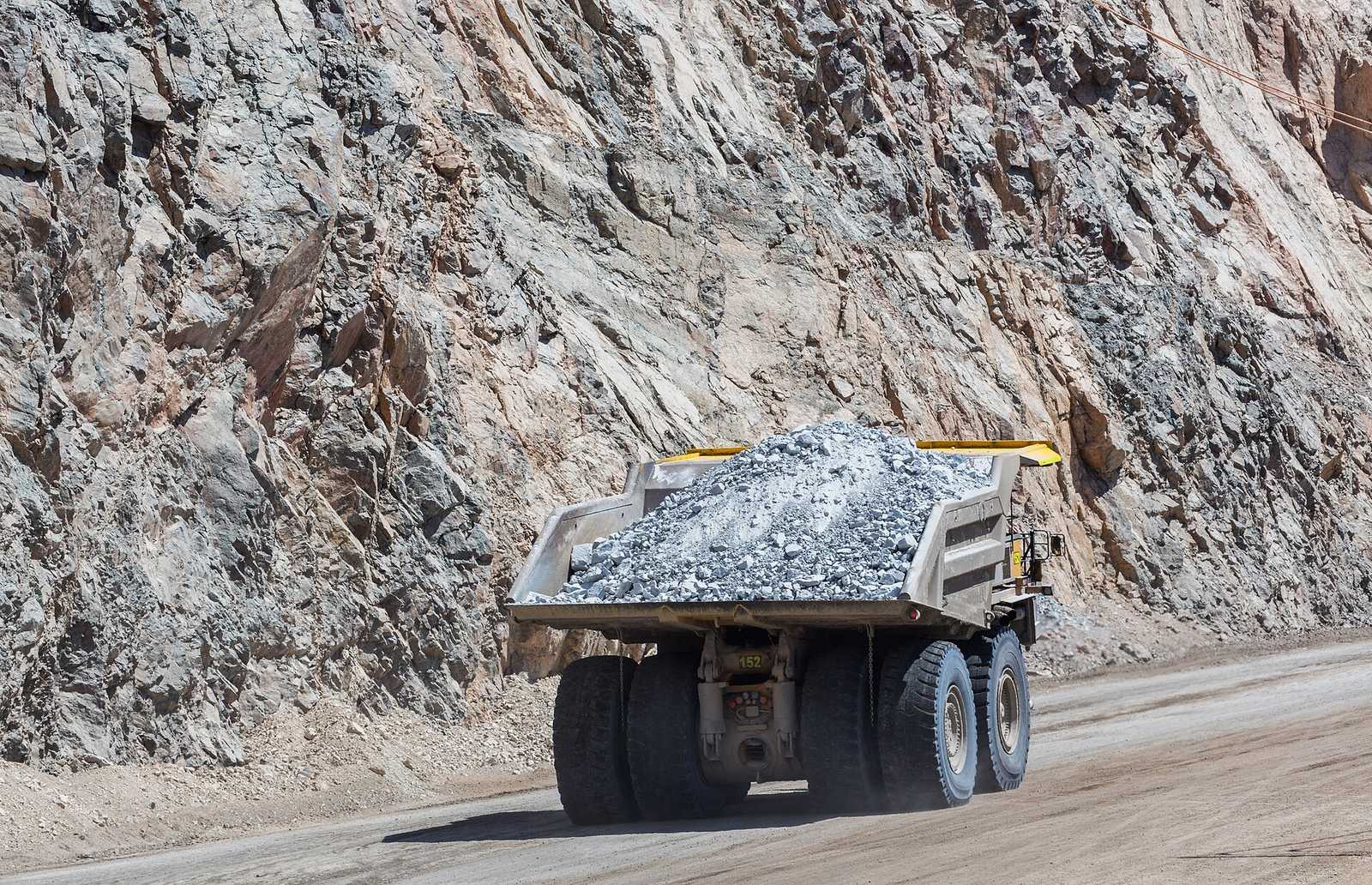
On a haul contract, swell is the reason the trucks move more cubic metres than the survey says came out of the pit. The weight stays the same; only the space it takes up grows. Caterpillar puts it this way: when material is excavated it “breaks up into different size particles that do not fit together”, and the air pockets lower the weight per unit of volume (Caterpillar Performance Handbook 50, p. 25-2, read 25 Sep 2026).
The bank, loose and compacted states are set out in the BCM entry. What follows is about the size of the swell figure and how a site can test its own.
Swell factor formula
Loose volume (LCM) = bank volume (BCM) × (1 + swell)
1 + swell = bank density (kg per BCM) ÷ loose density (kg per LCM)
Swell (%) = (bank density ÷ loose density - 1) × 100
Voids in the loose material (%) = swell ÷ (1 + swell) × 100
The second line is the useful one on site. It turns swell into a matter of two densities, both of which you can measure.
The handbook uses “swell factor” for the percentage itself: its rope shovel example gives “Swell factor: 35%” and then divides in-situ density by (1 + swell factor) to get loose density (p. 13-14). A figure of 35% and a multiplier of 1.35 describe the same rock, so any spreadsheet or contract should say which form it uses.
Swell by material
Caterpillar’s weight of materials table lists loose and bank densities (p. 27-6). Dividing one by the other gives the swell for each material. The same table carries a warning that the values vary “with moisture content, grain size, degree of compaction, etc.” and that tests are needed for exact figures.
| Material (handbook description) | Loose kg per m³ | Bank kg per m³ | Swell | Voids |
|---|---|---|---|---|
| Clay, dry | 1,480 | 1,840 | 24% | 20% |
| Earth, dry packed | 1,510 | 1,900 | 26% | 21% |
| Shale | 1,250 | 1,660 | 33% | 25% |
| Coal, bituminous, raw | 950 | 1,280 | 35% | 26% |
| Top soil | 950 | 1,370 | 44% | 31% |
| Basalt | 1,960 | 2,970 | 52% | 34% |
| Granite, broken | 1,660 | 2,730 | 64% | 39% |
| Sandstone | 1,510 | 2,520 | 67% | 40% |
| Limestone, broken | 1,540 | 2,610 | 69% | 41% |
Swell and voids calculated by Pay Dirt from the handbook densities. The handbook’s own swell, voids and load factor table (p. 27-1) gives the same relationship: 25% swell means 20% voids, and 50% swell means 33.3% voids.
Hard, blasted rock swells far more than soil. A contractor pricing waste stripping in sandstone or basalt needs at least half as much loose capacity again as the bank volume, before any allowance for bucket or body fill.
Checking swell on site
The handbook lists sand cone, balloon, cylinder, oil and nuclear gauge methods for bank density, and says several repetitions are needed for an average (p. 25-3). Loose density can come from a weighed load whose volume is known, for example from a laser scan of the body, which the handbook also mentions.
Common questions
What is a typical swell factor for blasted rock?
Worked from the Caterpillar handbook’s densities, broken granite swells about 64%, sandstone about 67% and broken limestone about 69%. Softer material swells less: shale and raw bituminous coal come out near 33% to 35%. Test your own material, because moisture and fragmentation change the figure.
Is swell factor the same as load factor?
No. They describe the same material from opposite ends. Swell takes you from bank volume up to loose volume. Load factor takes loose volume back down to bank volume, and equals 100% divided by (100% plus the swell percentage).
Can I measure swell factor on my own site?
Yes. Find the bank density from a sample taken out of the ground and the loose density from a weighed load of known volume. Swell is the bank density divided by the loose density, minus one.
Sources
- Caterpillar, Caterpillar Performance Handbook, Edition 50 (SEBD0351-50), June 2022, pages 13-14, 25-2, 25-3, 27-1 and 27-6. Read 25 Sep 2026.