Economics Guide
Month-end in contract mining: last load to invoice
Month-end in contract mining turns loads, hours and delays into a signed invoice: survey against truck counts, standing time, sign-off and a checklist.

Contents 9 sections
A mining contractor’s month-end turns the month’s loads, hours and delays into an invoice the client will sign. The volumes are measured, reconciled against the contractor’s own records, and agreed with the client together with hours and any standing time or delay claims, and only then does the invoice go out.
Much of the gap between the last load and the invoice goes on waiting for the survey and on arguing over records that nobody signed during the month. The survey wait is fixed by the calendar. The arguments can be settled before the month closes.
What gets measured and how
Caterpillar’s Performance Handbook lists four ways to find the load moved: “load weighing with scales”, “load estimating based on machine rating”, “surveyed volume divided by load count” and a “machine payload measurement system” (Cat Performance Handbook, Edition 50, read 25 Sep 2026). The handbook adds that overburden removal on coal mines is calculated by volume in bank cubic metres. Metal mines and aggregate producers mostly work in weight.
That gives three common bases for a contractor’s volume or tonnage:
| Basis | What it measures | Who holds the record | When it is ready |
|---|---|---|---|
| Survey | Bank volume removed, from the pit and dump surfaces | The mine’s surveyor | After the month-end survey is processed |
| Weighbridge or payload system | Tonnes per load | The mine or the contractor, by machine | Daily |
| Truck count | Loads counted, times an assumed volume or mass per load | The contractor’s tally clerk or dispatch | At the end of each shift |
On South African mines the survey belongs to the mine. The MHSA regulations require the employer to “appoint a competent person to be in charge of surveying, mapping and mine plans at the mine” (regulation 17.2(a), MHSC regulations booklet, read 25 Sep 2026). The contractor waits on the mine’s surveyor, and the date of the month-end survey sets the earliest date the volume can be agreed.
Volume contracts bill in bank cubic metres, the volume as it lay in the ground. See BCM for the conversion to tonnes.
Survey against truck counts
Truck counts turn loose volume in the truck body into bank volume with a load factor.
Load factor = 100% ÷ (100% + swell %)
BCM per load = loose m³ per load × load factor
Truck-count BCM = loads counted × BCM per load
Variance % = (survey BCM minus truck-count BCM) ÷ truck-count BCM × 100
The load factor relationship is from the Cat Performance Handbook. A swell of 25% gives a load factor of 0.80.
The two figures will not match exactly. The count assumes every truck carried the same volume at the same swell. The survey measures what left the pit, but only as well as the pick-up of the surfaces allows. When the survey comes in lower, look first at trucks loaded below the assumed volume, a swell above the one in the load factor, or loads counted twice. When it comes in higher, a missed tally sheet is the first thing to check.
What to do with the variance:
- Agree a tolerance with the client at the start of the contract, and what happens outside it.
- Invoice on the measurement the contract names. On a contract paid per bank cubic metre, that is normally the mine’s survey.
- Carry the gap back to the load factor. If the survey shows fewer BCM per load for three months running, weigh or measure a sample of loads and change the factor.
- Keep truck counts for the daily view. They give the production figure during the month, before the survey is in.
Hours, standing time and delay claims
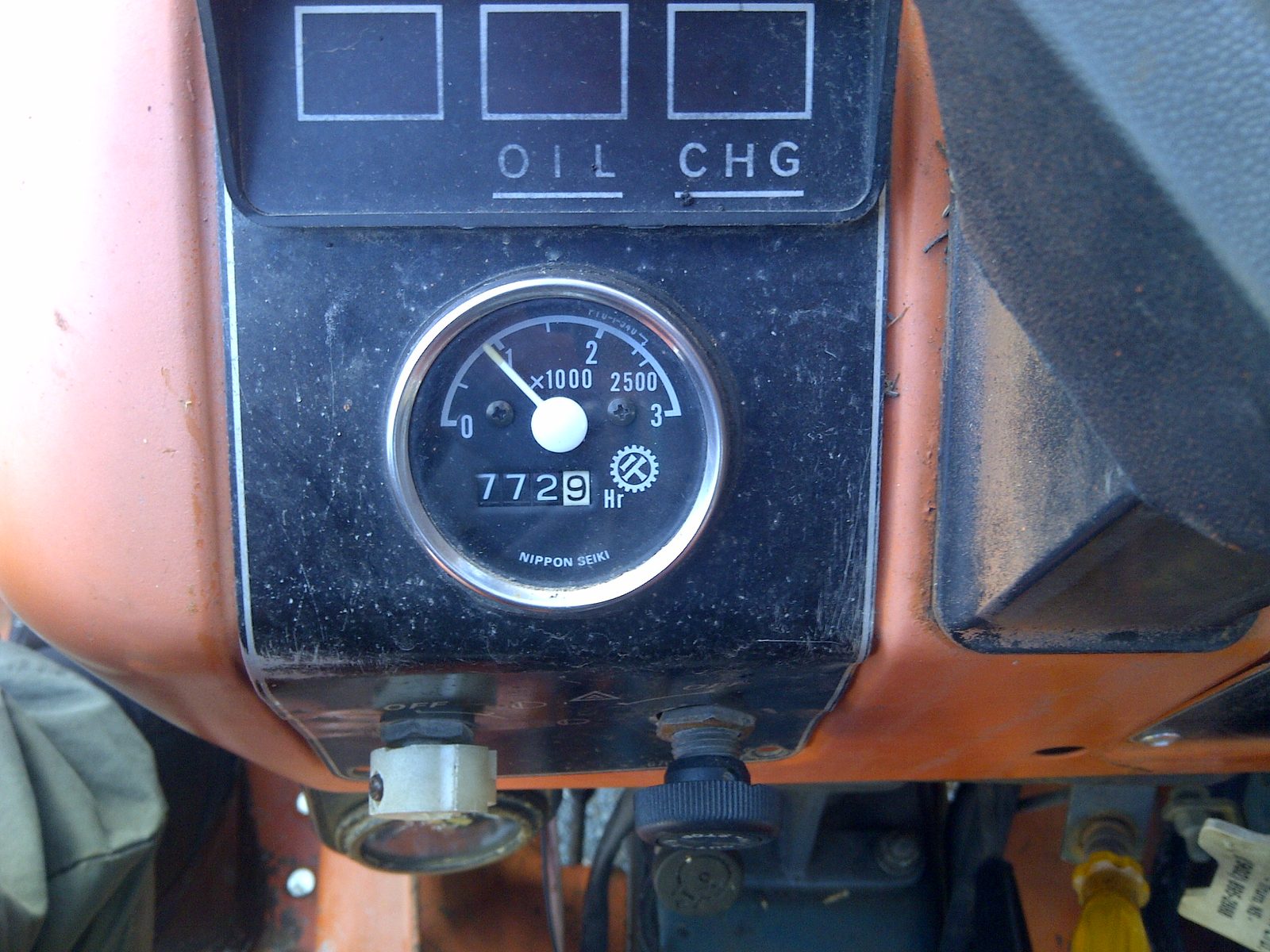
Plant on hourly hire is billed on hours, so the month’s hours need the same care as the volume. The hours come from the timesheet each operator and foreman signs, checked against the hour meter or telematics engine hours. See engine hours, SMR and hour meters for which figure to bill on.
The Global Mining Guidelines Group time framework covers the client’s stand-down. Equipment the client shuts down for lack of work, but wants available, sits in External Standby: “time during which the unit would be “off hours” for purposes of collecting billing hours” (GMG, 2020, read 25 Sep 2026). Whether those hours are paid at a standing rate is set by the contract. The standing time page covers the definition and the record to keep.
Delay and standing time claims have their own clock, separate from the month:
- Under the GCC 2015, a written claim goes to the Employer’s Agent “within 28 calendar days after the occurrence”, with updated particulars each month while the event continues (Tiefenthaler Legal, read 25 Sep 2026).
- FIDIC contracts rely on contemporary records, described in one judgment as documents “produced or prepared at or about the time giving rise to a claim” (Gould, hosted by FIDIC, read 25 Sep 2026).
An event on the 3rd of the month can be out of time for a claim before the month-end pack is assembled. Notify on the day, and let the month-end pack collect what was already notified.
The client sign-off and the invoice
The client checks the contractor’s pack against the survey, its own shift records and its own view of the delays. Once agreed, the client signs a measurement or payment certificate, and the contractor invoices against it.
Under the GCC 2015, the Employer’s Agent issues a “Monthly payment certificate” (clause 6.10.1). SAICE’s published FAQ gives recommended Contract Data wording for the payment period: the Employer pays “within 28 days … of receipt of the Payment Certificate signed by the Employer’s Agent” (SAICE GCC 2015 FAQ, read 25 Sep 2026). Mining contracts are often bespoke, and your own contract sets the certificate, the dates and the payment terms.
Anything not agreed at sign-off is carried as a disputed claim. Keep it off the main invoice so the agreed amount is paid on time.
An example month-end timeline
The days below are an example for a contract measured on survey. Your contract and the mine’s survey calendar set the real dates.
| When | Step | Owner | Output |
|---|---|---|---|
| Last shift of the month | Close the shift: loads, hour meters, fuel closing stock | Foreman, tally clerk | Final shift reports |
| Day 1 | Timesheets and standing time log closed and checked against meters | Site admin, contract lead | Hours per machine, standing hours per event |
| Days 1 to 3 | Month-end survey of pit and dumps | Mine surveyor | Surveyed BCM |
| Days 2 to 4 | Reconcile survey against truck counts; hours against telematics | Contract lead | Variance and reasons |
| Days 3 to 5 | Submit the month-end pack to the client | Site manager | Volumes, hours, claims, supporting records |
| Days 5 to 7 | Joint review and sign-off | Client’s engineer or Employer’s Agent | Signed measurement or payment certificate |
| After sign-off | Issue the invoice against the certificate | Finance | Invoice |
| Contract payment period | Payment | Client | Cash |
Most of the time goes between days 3 and 7. Every hour and every standing event already signed during the month comes out of that review.
Worked example: survey, truck count and invoice
Month-end checklist
The checklist is only as quick as the records behind it. Where each shift’s loads, hours and standing events were signed on the day, the month-end pack only has to collect them. There is a short argument for working that way in a note on keeping one usable shift record through the month.
Common questions
Should a contractor invoice on survey or on truck counts?
On whatever the contract names as the measurement. A contract paid per bank cubic metre normally uses the mine’s survey, with truck counts used to track the month and to check the survey. If the two differ by more than the site’s agreed tolerance, find out why before the figures are signed.
Why does the survey come out lower than the truck count?
Truck counts are an estimate: loads multiplied by an assumed volume per load. If trucks were loaded lighter than assumed, or the material swelled more than the load factor allows, the count overstates the bank volume. Weigh or measure a sample of loads and update the factor.
Can standing time be added at month-end?
Only if it was recorded at the time and notified within the period the contract sets. A claim built from memory at month-end is weak. Record it per machine on the day and get the client’s supervisor to acknowledge it that shift.
Sources
- Caterpillar Performance Handbook, Edition 50, Caterpillar, read 25 Sep 2026.
- Mine Health and Safety Act 29 of 1996 and Regulations (booklet, 2018), Mine Health and Safety Council, read 25 Sep 2026.
- A Standardized Time Classification Framework for Mobile Equipment in Surface Mining (2020), Global Mining Guidelines Group, read 25 Sep 2026.
- GCC 2015 corrections and frequently asked questions (2017), South African Institution of Civil Engineering, read 25 Sep 2026.
- Time is money: understanding extension of time claims under the GCC (2023), Tiefenthaler Legal, read 25 Sep 2026.
- Making claims for time and money: understanding the impact of notice provisions, Nicholas Gould, hosted by FIDIC, read 25 Sep 2026.