Maintenance Guide
Hour meters and engine hours: which to service and bill on
Service on engine hours from the hour meter, where OEM intervals are set. Bill on the hours your hire terms name, and reconcile the two weekly.
Contents 10 sections
Service a machine on its engine hours, the running total on its hour meter, because the manufacturer’s maintenance intervals are written against that meter. Bill on the hour basis your hire or contract terms name, since published hire terms differ on whether the timesheet, the meter or a tracker decides. Reconcile the timesheet against the meter every week so the gap is explained before the invoice goes out.
One machine on a mine site can carry several hour counts at once. They measure different things, and trouble starts when one is used for a job that belongs to another.
What SMR means
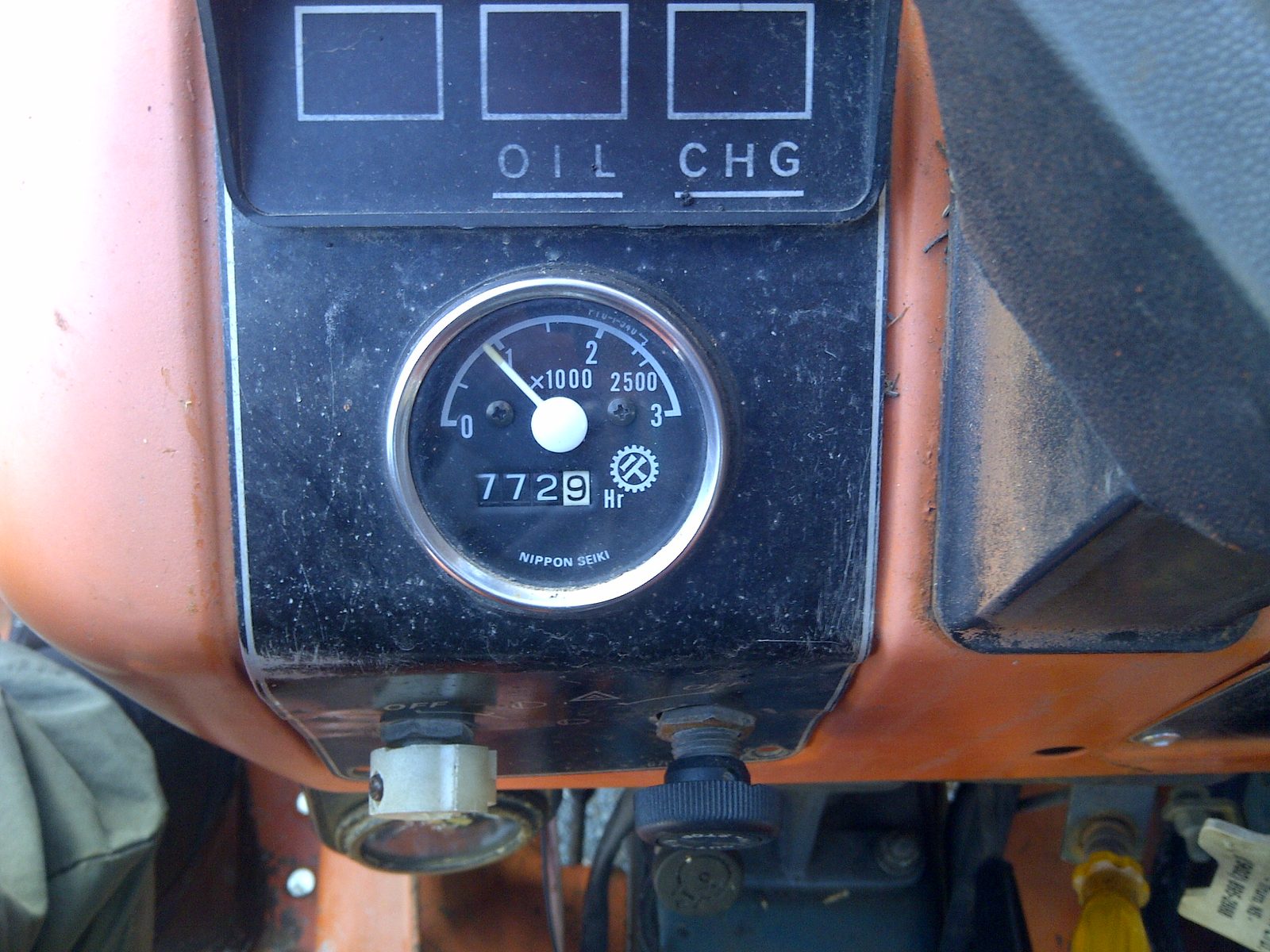
SMR is the service meter reading: the number on the machine’s hour meter. Komatsu calls it the service meter and Caterpillar the service hour meter. This piece uses the plainer “engine hours” from here on.
Komatsu’s operation and maintenance manual for its PC55MR-5 excavator says what the meter counts. “When the engine is running, the service meter advances even if the machine is not moving,” and it “advances 0.1 every 6 operation minutes, regardless of the engine speed” (Komatsu OMM TEN00691-03, read 25 Sep 2026). An engine idling at a loader queue adds hours at the same rate as one pulling up a ramp.
The Global Mining Guidelines Group (GMG) defines a service meter unit hour the same way. On a large component such as the engine, “the meter hours would represent the time the unit is running” (GMG time classification framework, 2020, read 25 Sep 2026). The same framework notes that “the meaning of the term ‘operating hour’ varies throughout the mining community.” That is the root of most arguments about hours.
The hour counts on a mine site
| Hour count | What it measures | Where it comes from | What it is for |
|---|---|---|---|
| Calendar or clock hours | Every hour in the period. GMG puts a year at 8,760 hours | The calendar | The base for availability |
| Shift hours | Hours the machine was scheduled to work | The line-up and shift roster | Availability and utilisation, contract minimums |
| Engine hours (SMR) | Time the engine ran | The hour meter on the machine | Service intervals, warranty, component life |
| Operating hours | Time the machine was available and under an operator’s control, in the GMG time model | Time and delay records | Utilisation, MTBF |
| Working hours | Operating hours minus operating delays | The operator’s timesheet or delay log | Hire and contract billing, production rates |
| Idle hours | Engine running with the machine not working | Telematics | Fuel and idle cost |
| Percussion, PTO or pump hours | Time a component ran, such as a rock drill striking or a pump turning | A component meter or the rig’s control system | Component servicing and some service contracts |
The operating and working hour definitions come from the GMG framework, where working time is operating time minus operating delay. ISO/TS 15143-3, the standard for mixed-fleet telematics data, lists cumulative operating hours and cumulative idle hours as separate fields (ISO/TS 15143-3:2016 preview, read 25 Sep 2026).
For the time model behind operating and working hours, see availability and utilisation.
Which hours the service intervals use
Engine hours. Caterpillar’s operation and maintenance manuals say it directly: “Use the service hour meter to determine servicing intervals.” Calendar intervals may be used where they “approximate the indicated service hour meter reading”. Service is due at whichever interval “occurs first” (Caterpillar OMM SEBU7494-06, read 25 Sep 2026). Komatsu’s manual tells the operator to “check the service meter reading every day to see if the maintenance time has come”, and its schedule is set out as every 250 hours, every 500 hours and so on.
For a workshop this means:
- Plan services from the meter. A planner who adds timesheet hours to last month’s reading will fall behind the meter every month, because the timesheet leaves out engine time that was not work. The worked example below shows how fast that adds up.
- Write the reading on every job card. Caterpillar’s C18 engine manual asks for maintenance documents to show “date, service hours, fuel consumption, unit number, and engine serial number” (Caterpillar OMM SEBU7899, read 25 Sep 2026). A job card without the hour meter reading cannot be placed on the machine’s service history.
- Hours are one measure of wear. The same Caterpillar manual says a record of service hours shows when “speed sensitive components” need attention, while fuel consumption shows when “load sensitive components” need attention and “also determines overhaul intervals”. A truck that idles a lot and a truck that hauls uphill all shift can show the same engine hours and different fuel burn.
Drills and other machines with more than one meter
A drill rig can carry an engine hour meter and a separate count for the rock drill. Engine hours drive the engine and hydraulic services. Rock drill servicing is often counted in percussion hours, the time the drill was striking. Sandvik sells rock drill service on that basis: “You pay a set price per percussion hour each month” (Sandvik, rock drill price per hour, read 25 Sep 2026).
Pumps, compressors and machines with a power take-off follow the same pattern. Where a machine has more than one meter, the job card and the service plan should name which meter each interval runs on. The machine’s own manual is the authority for that.
Which hours the invoice uses
The contract decides. Published hire terms show how far apart the answers can be.
The model hire conditions of the UK’s Construction Plant-hire Association are one published example. Clause 18(a) of the October 2021 edition requires the hirer to give “an accurate statement of the number of hours the Plant has worked each day”. Where the owner supplies the operator, the hirer’s signature on the time sheets binds the hirer “to accept the hours shown” (CPA Model Conditions 2021, read 25 Sep 2026). Plant is hired either “for a stated minimum number of hours per Working Day or per Working Week” or with no minimum. When plant is prevented from working for a complete week, the hire charge drops to “two thirds of the hire rate” unless another idle rate is agreed.
South African hire terms can go the other way. One KwaZulu-Natal plant hire company’s rates page says “Time Sheets are only used as a guideline” and charges from the time the machine is dispatched to site, with a “minimum 8,5 hours per day (regardless of hour meter/time sheet record) if working by hour”. It also reserves the right to charge for “hours not declared on Time Sheets but recorded as worked hours by the tracking system fitted to our plant” (Siyashesha Group, plant rates and terms, read 25 Sep 2026). The same page quotes dry rates, meaning the client provides the diesel.
Settle these in writing before the machine arrives:
- The hour basis. Timesheet hours worked, engine hours from the meter, or telematics hours. Say which one wins when they disagree.
- The minimum. Per day, per week or per month, and how breakdown hours recorded on job cards reduce it.
- Standing and idle. What rate applies when the machine is on site and ready but not working. See standing time for how to record it.
Why the hour counts disagree
The CPA’s 2021 wording shows how easily this goes wrong. Clause 18(a) says that where telematics are checked against the timesheet, “the telematics will take precedence over all other records” if there is a conflict. It then adds in brackets that “if there is any conflict between the signed timesheet and any other record taken, then the signed timesheet takes precedence.” If a contract carries wording like this, agree in writing which record governs your hire.
The common causes of a gap between meter, telematics and timesheet:
- Engine running with no work: warm-up, cool-down, blast clearances, waiting at the tip or the loader. The meter counts it. The timesheet may not.
- Timesheets filled in from memory at the end of the shift, or rounded to the shift length.
- Telematics idle hours that include queue time the contract treats as working.
- A replaced meter, display or engine control unit. Write the old and new readings on a job card the day it happens.
- A telematics unit that lost signal or power. The hour meter on the machine is still the reference for servicing.
- Machines moved between sites or contracts mid-month with no reading taken at the move.
For what the manufacturers’ portals report and where their hours come from, see telematics on mine sites. Idle hours have their own cost, covered in idle time in mining fleets. Some contractors bring meter readings, telematics hours and timesheets into one record across mixed OEM fleets so the three counts can be compared side by side.
Worked example: one dump truck over one month
Weekly reconciliation checklist
Common questions
What does SMR mean on a machine?
SMR is the service meter reading: the running total on the machine’s hour meter. It counts the time the engine has run, whether or not the machine was working, and the manufacturer’s service intervals are set against it.
Should a hired machine be billed on the hour meter or the timesheet?
On whatever the hire terms say. The UK model hire conditions bill on hours worked from signed timesheets, with an optional daily or weekly minimum. Some South African hire terms treat the timesheet as a guideline and let tracker hours override it. Read the clause before the month starts.
Why is the hour meter higher than the timesheet?
The meter keeps counting while the engine runs during warm-up, cool-down, blast clearances and waiting with the engine on. A timesheet records the hours the operator was working. A gap is normal; an unexplained or growing gap needs a look.
Sources
- Komatsu, Operation & Maintenance Manual TEN00691-03, PC45MR-5 / PC55MR-5, read 25 Sep 2026
- Caterpillar, Operation and Maintenance Manual SEBU7494-06, read 25 Sep 2026
- Caterpillar, Operation and Maintenance Manual SEBU7899, C18 Industrial Engine, read 25 Sep 2026
- Global Mining Guidelines Group, A Standardized Time Classification Framework for Mobile Equipment in Surface Mining (2020), read 25 Sep 2026
- Sandvik, Rock drill price per hour, read 25 Sep 2026
- Construction Plant-hire Association, Model Conditions for the Hiring of Plant (October 2021), read 25 Sep 2026
- Siyashesha Group, plant hire rates and terms, read 25 Sep 2026
- ISO/TS 15143-3:2016, Worksite data exchange, Part 3: Telematics data (preview), read 25 Sep 2026