Markets Briefing
Coal mining in South Africa: a contractor's briefing
Coal mining in South Africa: about 236 million tonnes a year, mostly in Mpumalanga. Where it is mined, Eskom and exports, rail, rehabilitation and risks.
Contents 9 sections
South Africa mined 236 million tonnes of coal in 2024 and about the same in 2025, more by volume than any other mineral it produces. Most of it comes from the Witbank and Highveld coalfields in Mpumalanga, with the Waterberg in Limpopo the other large field. Eskom and Sasol burn nearly two-thirds, and about a third is exported, almost all through Richards Bay. For a contractor the work is in opencast pits: stripping overburden, loading and hauling coal, and rehabilitating behind the face.
Figures checked 25 Sep 2026. The next Stats SA mining release, for August 2026, is due on 13 Oct 2026.
Coal mining in South Africa: key figures
| Measure | Figure | Year | Source |
|---|---|---|---|
| Coal production, South Africa | 235,966,335 tonnes | 2024 | DMPR data in Minerals Council datasheets |
| Coal production (estimate) | about 236 million tonnes, down 8.9% on 2019 | 2025 | Minerals Council, Facts and Figures 2025 |
| Total coal sales | R200.1 billion (248.6 million tonnes) | 2024 | DMPR data in Minerals Council datasheets |
| Coal exports (SARS) | 71.3 million tonnes | 2024 | Minerals Council, from SARS data |
| Coal exports (annualised estimate) | about 72 million tonnes, 94% through Richards Bay | 2025 | Minerals Council, from SARS data |
| Direct employees, coal mining | 98,269 | 2024 | DMPR data in Minerals Council datasheets |
| Direct employees (estimate) | about 97,600 | 2025 | Minerals Council, Facts and Figures 2025 |
| Coal burnt by Eskom | about 108 million tonnes | 2024/25 | Eskom MYPD 6 submission, via the Minerals Council |
| Coal used by Sasol | about 30 to 40 million tonnes | 2025 | Minerals Council, Facts and Figures 2025 |
| Richards Bay Coal Terminal exports | 57.66 million tonnes, against capacity of 91 million | 2025 | RBCT, reported by Daily Maverick |
| Coal price, annual average | about US$90 a tonne, down from about US$106 | 2025 | Minerals Council, Facts and Figures 2025 |
| Coal fatalities | 2, down from 6 in 2024 | 2025 | DMPR, Budget Vote speech |
| Coal production, year on year | down 7.5% | Jul 2026 | Stats SA P2041 |
| Coal sales | R15,899.4 million in the month, up 5.0% | Jul 2026 | Stats SA P2041 |
Sources: Minerals Council Facts and Figures 2025, Minerals Council 2024 datasheets, Stats SA P2041 July 2026, Daily Maverick, 27 Jan 2026, Budget Vote, 19 May 2026, all read 25 Sep 2026.
Coal carries a weight of 26.32 in Stats SA’s mining index, second only to PGMs, so a weak coal month pulls the national figure down. Coal output fell year on year in every month from February to July 2026, by between 5.5% and 9.7%. Sales in rand still rose in July.
Where coal is mined
USGS reports that “the Witbank Coalfield accounted for most of South Africa’s production” (USGS 2022 Minerals Yearbook). A 2015 CSIR text put Mpumalanga at “about 84% of local coal production”, followed by the Free State and Limpopo (Jeffrey, Henry and McGill, 2015). We found no more recent split by province from an official source.
| Coalfield | Province | What the sources say |
|---|---|---|
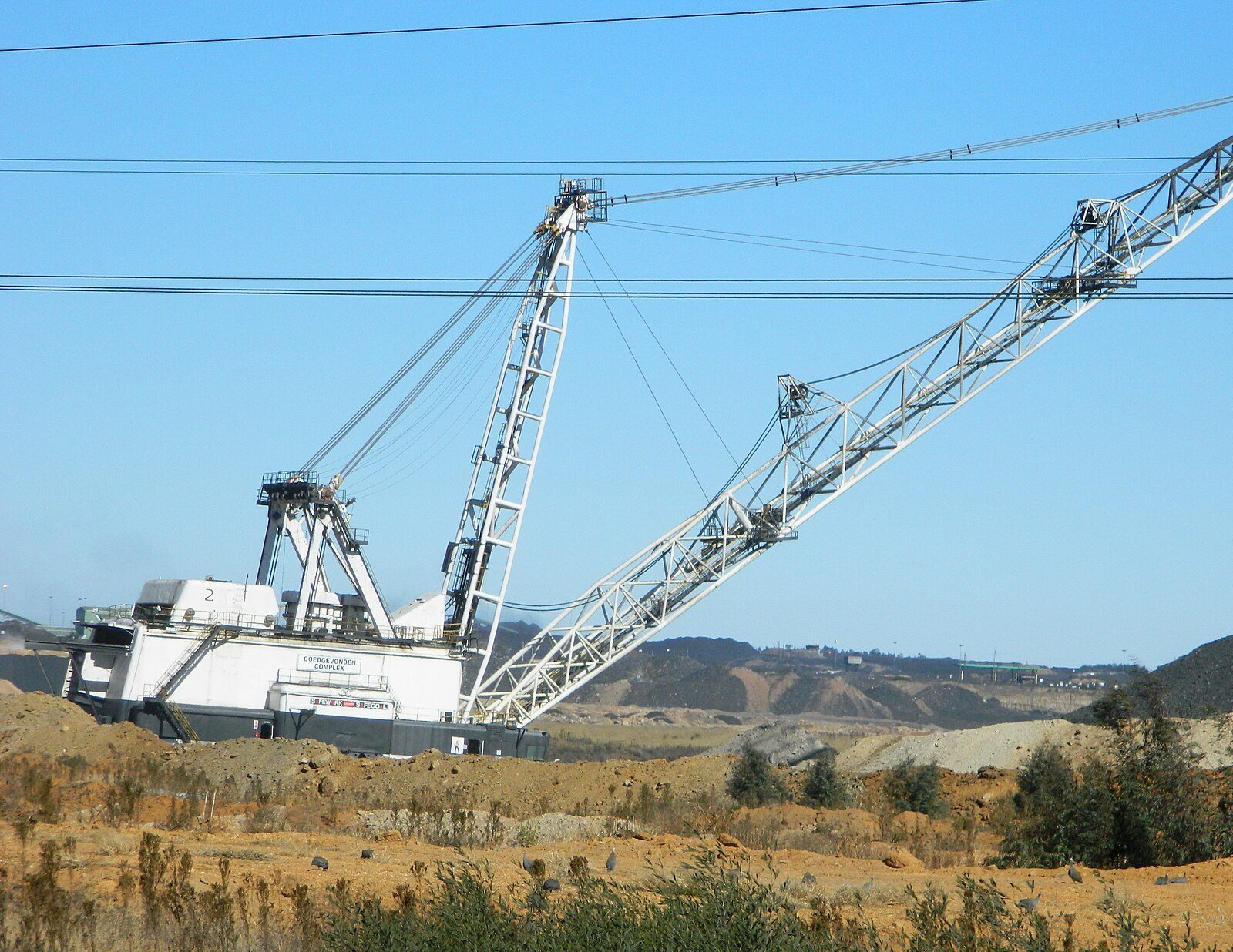
| Witbank (eMalahleni) | Mpumalanga | Most of national production (USGS). Glencore and ARM’s Goedgevonden mine is on properties “in the district of Witbank (now known as Emalahleni)” (SCA judgment, 2026) |
| Highveld | Mpumalanga | The traditional Witbank, Ermelo and Highveld mines are “close to exhaustion”, with “new large mines” rare and “smaller mines increasingly common” (CSIR, 2015) |
| Ermelo | Mpumalanga | Many junior miners hold small blocks “adjacent to and within the Highveld, Witbank and Ermelo coalfields” (CSIR, 2015) |
| Waterberg (Lephalale) | Limpopo | Exxaro’s Grootegeluk open pit, 29.8 million tonnes in 2022 (USGS). New mines held back by “the lack of infrastructure and water” and distance from ports (USGS) |
| Soutpansberg (Makhado) | Limpopo | MC Mining’s Makhado project, planned at 1.1 million tonnes a year of saleable coal in phase one (USGS) |
| Vaal | Gauteng | Seriti’s New Vaal mine, about 16 million tonnes a year in 2022, its only mine outside Mpumalanga (USGS) |
USGS lists the largest producers in 2022:
- Seriti Coal, nearly 52 million tonnes a year, all in Mpumalanga except New Vaal
- Exxaro, 45 million tonnes, including Grootegeluk
- Sasol, 33.6 million tonnes in its 2022 financial year, mostly for its synthetic fuel plants
- Thungela, 16.1 million tonnes, with “about 90%” of sales exported
The same report names other producers in Mpumalanga, from Glencore and ARM’s three complexes to single-mine operators such as HCI’s Palesa and Kuyasa’s Delmas mine.
How it is mined and where contractors work
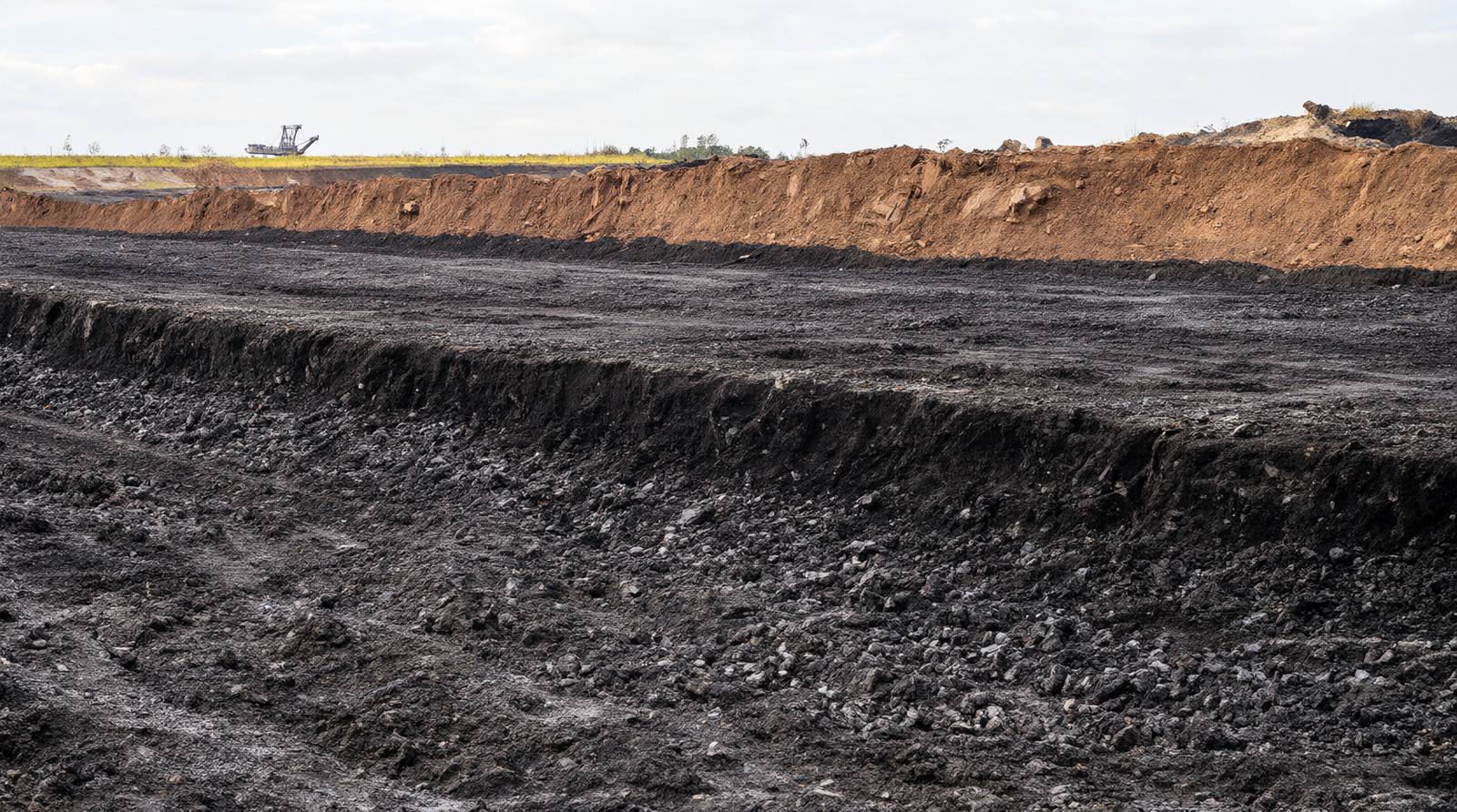
The most recent split by mining method we found is in a text published in 2015 on CSIR ResearchSpace. It put opencast mines at “±53%” of production, underground bord and pillar at 40%, and stoping and longwall at 7% between them. It described the opencast method plainly: “topsoil cover is removed to stockpiles, the overburden is blasted and the coal is then blasted and removed”, by “trucks and shovels, or by the use of draglines” (CSIR, 2015).
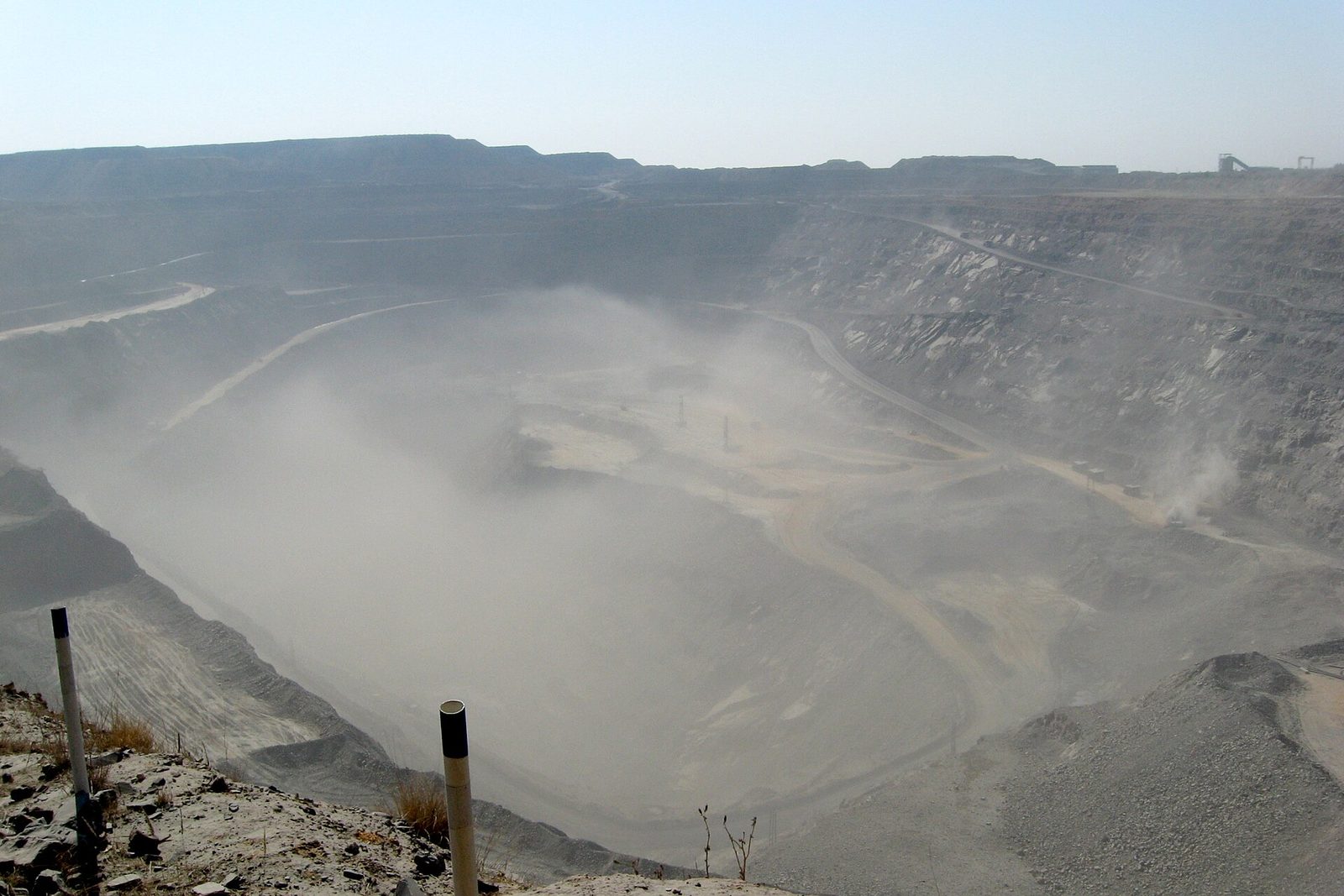
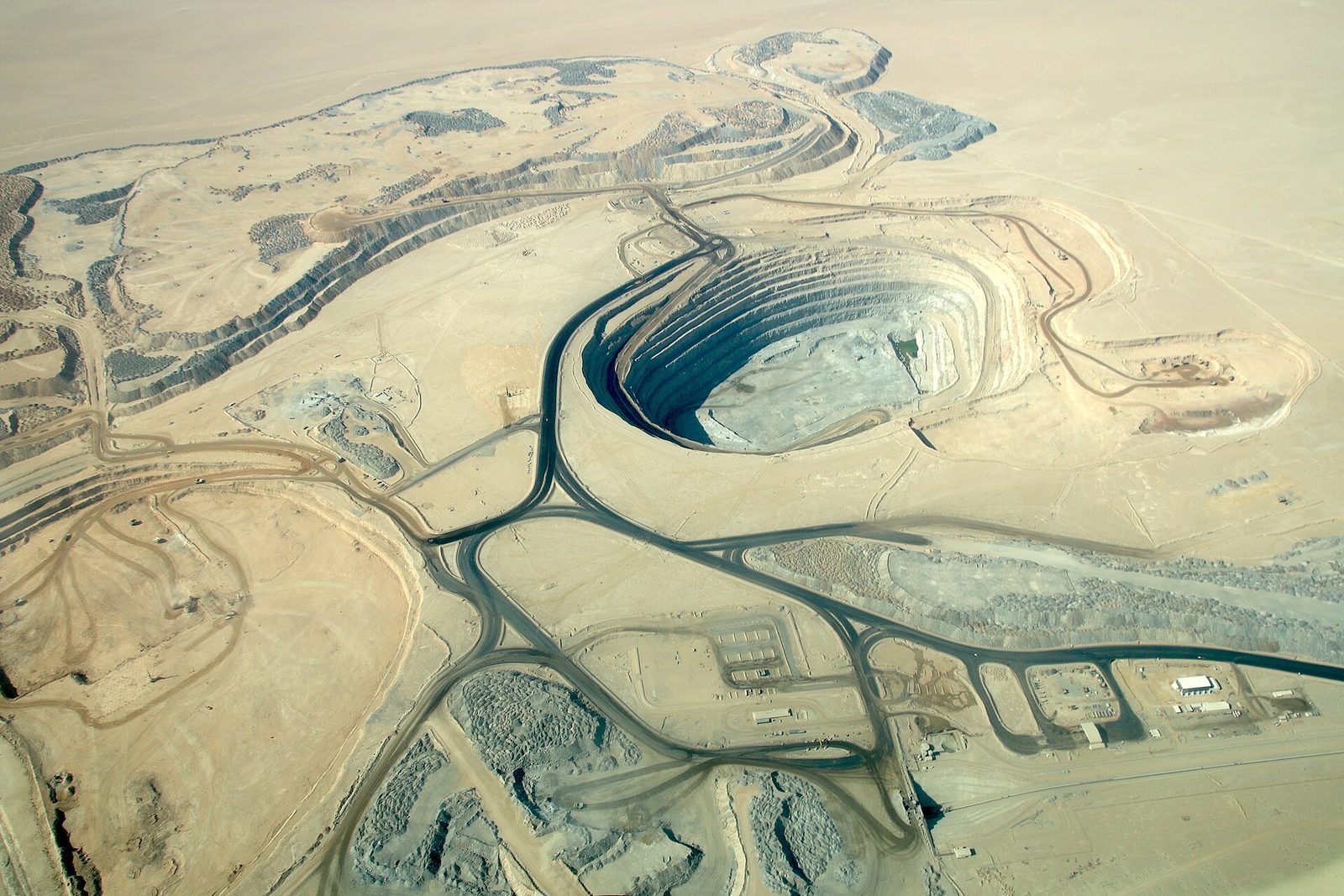
Exxaro’s Grootegeluk is one example of the truck and shovel method at scale. “A series of parallel benches is advanced progressively across the deposit via drilling, blasting, loading and hauling with truck-and-shovel fleets”, across three overburden benches, ten run of mine benches and four interburden benches (Exxaro, 2023).
| Work | What it involves | Where the sources place it |
|---|---|---|
| Overburden stripping | Drill, blast, load and haul waste to spoil or dumps | All opencast pits; the strip ratio sets the volume per tonne of coal |
| Coal mining | Blast, load and haul coal to the run of mine pad or plant | Opencast pits; interburden between seams at multi-seam pits such as Grootegeluk |
| Re-mining old workings | Opencast mining of pillars left by old underground mines | “Many abandoned underground coal mines that still have significant reserves are being re-mined using open-cast methods” (CSIR, 2015) |
| Road haulage | Coal trucked from mine to power station or siding | Mpumalanga, where heavy coal trucks have worn the roads (CSIR, 2015) |
| Rehabilitation | Backfilling, shaping, topsoiling behind the face | Every opencast pit, under its approved environmental plan |
The diesel refund covers most of this work only when the mine supplies the fuel. Our diesel refund guide sets out the dry and wet rule.
Eskom, Sasol and exports
Domestic demand sets the base load for contractors. Eskom reported burning about 108 million tonnes in 2024/25, and Sasol uses 30 to 40 million tonnes. “Together, these two entities consumed nearly two-thirds of total coal production in 2025” (Minerals Council, Facts and Figures 2025).
That base is set to shrink. The Integrated Resource Plan released in November 2025 has coal falling from 59% of Eskom’s installed capacity to 11% by 2042. The Minerals Council reads that as Eskom’s burn falling “to around 40 million tonnes from the current 108 million tonnes” unless stations adopt carbon capture. USGS also reported that Eskom “planned to decommission half of its capacity by 2035”. Contract scopes at mines that feed a particular station depend on that station’s remaining life.
Exports take the rest. About 80% of 2025 exports went to Asia, with India buying about 46% of all exports. Europe took 10% and Africa 10%. The Minerals Council put the average price at about US$90 a tonne in 2025, down 14.9% on 2024, and the Richards Bay price averaged US$89.2 a tonne in December 2025. Export pits depend on both the price and the rail line.
Richards Bay and the coal line
Export coal moves on Transnet’s 600 kilometre line from the coalfields to Richards Bay. RBCT has capacity for 91 million tonnes a year and shipped 57.66 million tonnes in 2025, up more than 10%. Its chief executive said more than 60 million tonnes was “on the cards” for 2026 (Daily Maverick, 27 Jan 2026). The record was 84 million tonnes in 2017, and Transnet is targeting 81 million tonnes (Minerals Council).
Daily Maverick’s report credits two changes on the line in 2025: new locomotives replaced unreliable ones, and cable theft on the coal line fell “from 180km in 2024 to 59km last year”. Transnet moved 167.9 million tonnes by rail in the year to 31 Mar 2026, and the first of 11 private train operators are expected to start in 2026/27 (SAnews, 11 Sep 2026).
Rail capacity reaches back into the pit. Thungela, which exports about 90% of its sales, put part of its 2022 production fall down to “Transnet’s reduced rail capacity” along with rain and lower domestic demand (USGS 2022 Minerals Yearbook).
Rehabilitation obligations
Surface mining leaves the most land to restore. A 2026 study for the Heinrich Böll Stiftung notes that opencast and strip mining disturb “a much larger area of land than underground mining does”. Coal mining had disturbed 3,260 square kilometres of farmland by 2014 (Cole, 2026).
- The plan sets the work. Rehabilitation on a mine follows the environmental management programme or plan approved under the MPRDA, which Schedule 6 names in the refund rule below. A contractor does the physical work to that plan and the mine’s instructions.
- Coal provisions. The Böll study reports that financial provisions for coal mine rehabilitation were almost R17.5 billion in 2015, and that at least 11 coal mines were expected to close in the following decade. It also finds that major houses have “sold operations to junior mining companies with less capacity to close mines properly”.
- Diesel on rehabilitation. Diesel used on “Rehabilitation required by an environmental management programme or plan approved in terms of the Mineral and Petroleum Resources Development Act” qualifies for the refund. It stops qualifying off the mining site or once a closure certificate is issued (Schedule 6, Note 6(f)(iii)(vv)). The same Note lists “Coal stockpiling for the prevention of the spontaneous combustion of coal” as a qualifying activity.
The CSIR text describes opencast rehabilitation as returning broken rock to the pit and then the stockpiled topsoil, and the Böll study describes concurrent rehabilitation as restoring land “incrementally” during mining. A contractor on an opencast coal pit should expect rehabilitation dozing and topsoil handling in the same schedule as stripping and coal haulage.
Risks and what to watch
Surface mining contractors in Mpumalanga and Limpopo are listed by province in the contractor directory.
Common questions
How much coal does South Africa produce?
DMPR data published by the Minerals Council put 2024 production at 236.0 million tonnes. The Minerals Council estimates about 236 million tonnes for 2025, flat on 2024 and 8.9% below 2019.
Where are the coal mines in Mpumalanga?
Mostly on the Witbank and Highveld coalfields, with the Ermelo field as well. USGS names the Witbank Coalfield, around eMalahleni, as the source of most of South Africa’s production, and lists Seriti’s Middelburg, Kriel and Khutala mines among those in Mpumalanga. Outside Mpumalanga, the Waterberg field in Limpopo holds the Grootegeluk open pit near Lephalale.
Is most South African coal mined by opencast methods?
A 2015 CSIR text put opencast mines at about 53% of production, with underground bord and pillar at 40%, stoping at 4% and longwall at 3%. We found no more recent official split.
Sources
- Minerals Council South Africa, Facts and Figures 2025 Pocketbook (launched 9 Feb 2026), read 25 Sep 2026
- Minerals Council South Africa, Facts and Figures 2024 datasheets, DMPR data (5 Aug 2025), read 25 Sep 2026
- Stats SA, Mining: Production and sales, July 2026 (P2041) (10 Sep 2026), read 25 Sep 2026
- USGS, 2022 Minerals Yearbook: South Africa, read 25 Sep 2026
- Jeffrey, Henry and McGill, Introduction to South African coal mining and exploration (2015, CSIR ResearchSpace), read 25 Sep 2026
- Exxaro, Mineral Resources and Mineral Reserves report 2023: Grootegeluk, read 25 Sep 2026
- Daily Maverick, Richards Bay Coal Terminal exports rise over 10% in 2025 (27 Jan 2026), read 25 Sep 2026
- SAnews, Transnet records profit (11 Sep 2026), read 25 Sep 2026
- Minister Gwede Mantashe, Budget Vote 34, Department of Mineral and Petroleum Resources (19 May 2026), read 25 Sep 2026
- Heinrich Böll Stiftung, Financial Provisions for Mine Rehabilitation and Mine Closure in South Africa (Dr Megan Cole) (Mar 2026), read 25 Sep 2026
- SARS, Schedule No. 6, consolidated 11 Sep 2026, read 25 Sep 2026
- Supreme Court of Appeal, Glencore Operations SA v CSARS (406/2024) [2026] ZASCA 47, judgment (9 Apr 2026), read 25 Sep 2026